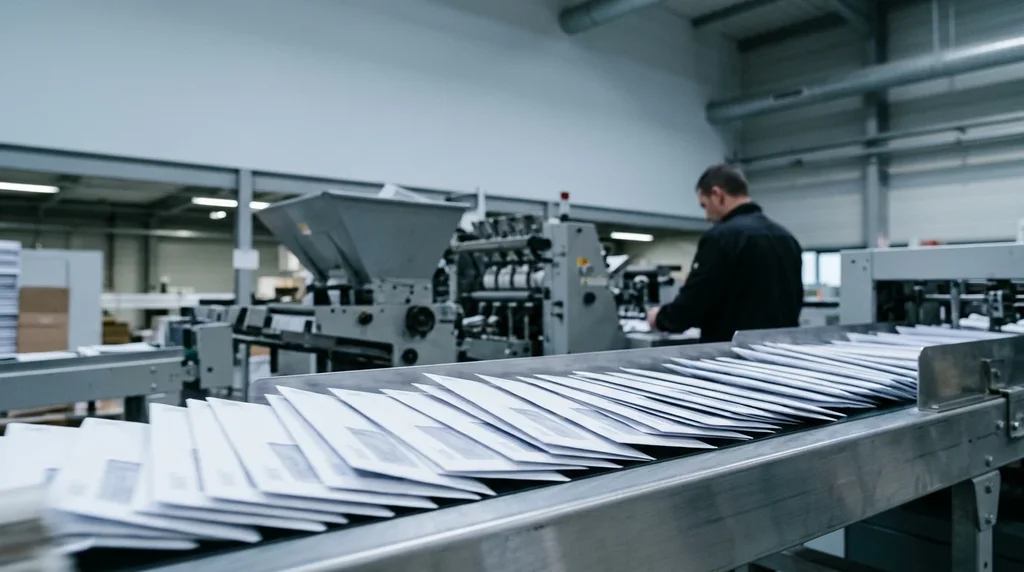
Docaposte, a subsidiary of the La Poste group, confirms that the first names, surnames and postal addresses of 22 million people were stolen from Maileva, its mail-sending brand. The written confirmation was published on 13 November 2026 by the website Cyberattaque.org. SGS, the Swiss inspection and certification group, has for its part acknowledged an incident affecting its French vehicle inspection networks, according to the website FrenchBreaches on 14 November, after a data leak claimed by the hacker ChimeraZ. A stolen address is used first and foremost for scams by post and by text message; for crypto holders, it can also expose them to physical threats.
What Maileva confirms, and what it does not say
Maileva acknowledges a theft of identification data, not the theft of the content of all the letters. In its written reply to Cyberattaque.org, the company states: “22 million people are affected by the theft of their identification data: first name, surname, postal address. Several thousand of Maileva’s business customers are affected by this incident.”
The incident dates back to 23 September 2026. That day, Maileva suspended all its services after detecting suspicious activity, according to Cyberattaque.org. The outage lasted six days; Docaposte announced a return to normal on 29 September. Initially, the company spoke only of attempts to access customer accounts in order to send fake letters.
Internal documents obtained by Cyberattaque.org mention around 39 million mail references. Once duplicates are removed, they correspond to around 22 million distinct people. The same person may indeed have received several letters from several senders.
For some customers, the exposure goes beyond name and address. According to the notifications identified by Cyberattaque.org:
- the Hôpital Foch, in Suresnes, says that payment reminders sent between 9 and 23 September 2026 may have been read, with invoice numbers, treatment dates and amounts;
- the social housing provider Flandre Opale Habitat mentions letters going back as far as ten years;
- laboratories of the Inovie group report the surnames, first names and addresses of patients, with no payment data or passwords.
Maileva has notified the Commission nationale de l’informatique et des libertés (CNIL), the French data protection authority, and filed a complaint; a judicial investigation is under way. The company specifies that informing the people concerned is the responsibility of its business customers. No figures have been released on how many people have actually been notified.
SGS: an incident confirmed, figures that are still the hacker’s
SGS confirms an incident, but not the volumes announced. According to FrenchBreaches’ update of 14 November 2026, the group acknowledged, in a communication sent to customers, a cybersecurity incident affecting the online booking systems of three French vehicle inspection networks: Sécuritest, Auto Sécurité France and Vérif’Autos. Surnames, first names, postal addresses, email addresses, phone numbers and licence plates may have been accessed. No banking data is affected, according to that communication.
The figures come from the hacker. ChimeraZ claimed these files on 7 November 2026, and FrenchBreaches revealed they were up for sale on 8 November. The seller advertises around 96 GB, 259 million rows, 22,688,152 people and 40,920,439 unique plates, of which around 13 million are linked to personal data. The website L’Automobiliste noted on 15 November 2026 that neither these volumes nor the exact origin of the files have been publicly validated.
| Point | Maileva (Docaposte) | SGS (French vehicle inspection networks) |
|---|---|---|
| Incident acknowledged | Yes, data theft confirmed in writing | Yes, incident affecting online booking |
| Number of people | 22 million, Maileva’s figure | 22.7 million, the hacker’s figure only |
| Data cited | First name, surname, postal address; more for some customers | Identity, contact details, plates; no banking data |
| Source of the confirmation | Written reply to Cyberattaque.org | Communication to customers, reported by FrenchBreaches |
Are SGS customers in Switzerland affected?
Nothing establishes this at this stage. The incident confirmed by SGS concerns three French brands, and neither the communication reported by FrenchBreaches nor L’Automobiliste mentions any centre or customer in Switzerland. SGS has not published any figures on the incident.
The group is nonetheless well known to Swiss investors. On 23 October 2026 it published quarterly revenue of 1.98 billion francs, and its management puts the revenue from its cybersecurity business at 300 million francs a year, as 2clics reported at the time.
Our analysis: only motorists who used these networks in France, cross-border commuters for example, could appear in the files. The same goes for Maileva, whose senders cited in the notifications are French organisations. No source puts a figure on the number of people based outside France.
Why a stolen address exposes crypto holders
A postal address is enough to locate a person. The Maileva file does not say who holds crypto, points out the Journal du Coin. But cross-referenced with an older leak from an exchange or a wallet manufacturer, it provides the address to go to. The French Ministry of the Interior recorded 90 cases of kidnapping, unlawful detention or extortion linked to crypto between 1 January and mid-August 2026, according to figures passed on to the outlet Cointelegraph and cited by the Journal du Coin.
ChimeraZ also targets this audience directly. On 10 November 2026, it put up for sale a 411 MB file attributed to Lithos, a decentralised exchange on the Plasma blockchain. FrenchBreaches found 173,146 wallet addresses, 112,436 names and 50,239 IP addresses in it, according to the Journal du Coin. The sample contains no private key or recovery phrase, and Lithos has not responded. A wallet linked to a name, however, makes its history and balance readable by the buyer.
The pseudonym is not new: ChimeraZ was already behind several files in the series of cyberattacks in France on 17 October 2026.
Precautions to take after a data leak
The most likely risk remains a scam that cites accurate information. An address, a plate or the name of a real sender does not prove that a message is genuine.
- Be wary of a letter, text message or email demanding urgent payment, even if it cites a real plate or a real sender. L’Automobiliste points out that the French fines agency, ANTAI, never sends text messages.
- Check any request by contacting the organisation yourself, using a number or website found independently of the message.
- Never disclose your recovery phrase: no company asks for it, whether by post or by phone.
- Do not publicly link a wallet address to your name, and do not talk about the amount of your holdings.
- In Switzerland, report a suspicious message to the Federal Office for Cybersecurity (FOCS), which receives voluntary reports from the public.
The pattern of an attacked service provider exposing its customers’ customers can also be seen in Switzerland. After the data theft at TCS Camping, scammers wrote to customers on WhatsApp with real booking information. For PK Softech, a software supplier to pension funds, the Federal Data Protection and Information Commissioner opened an investigation into the PK Softech cyberattack. And the federation Swiss Basketball confirmed a theft of its licence holders’ data on 31 October 2026.
What we do not know yet
- How many of the 22 million people affected at Maileva have actually been informed by the business customers.
- The actual number of Sécuritest, Auto Sécurité France and Vérif’Autos customers affected: SGS has not confirmed the hacker’s figures.
- The authenticity of the file attributed to Lithos, which has not responded.
Sources
- Cyberattaque.org, “Docaposte confirme le vol des adresses de 22 millions de Français après une cyberattaque chez cette filiale de La Poste”, 13 November 2026: cyberattaque.org
- FrenchBreaches, “Fuite de données chez Sécuritest : plus de 22 millions de clients potentiellement concernés”, 8 November 2026, updated on 14 November 2026: frenchbreaches.com
- L’Automobiliste, “Sécuritest : des clients informés d’un incident, attention aux fausses amendes”, 15 November 2026: lautomobiliste.fr
- Journal du Coin, “Crypto : 22 millions d’adresses volées chez La Poste, la semaine noire des fuites de données en France”, 14 November 2026: journalducoin.com