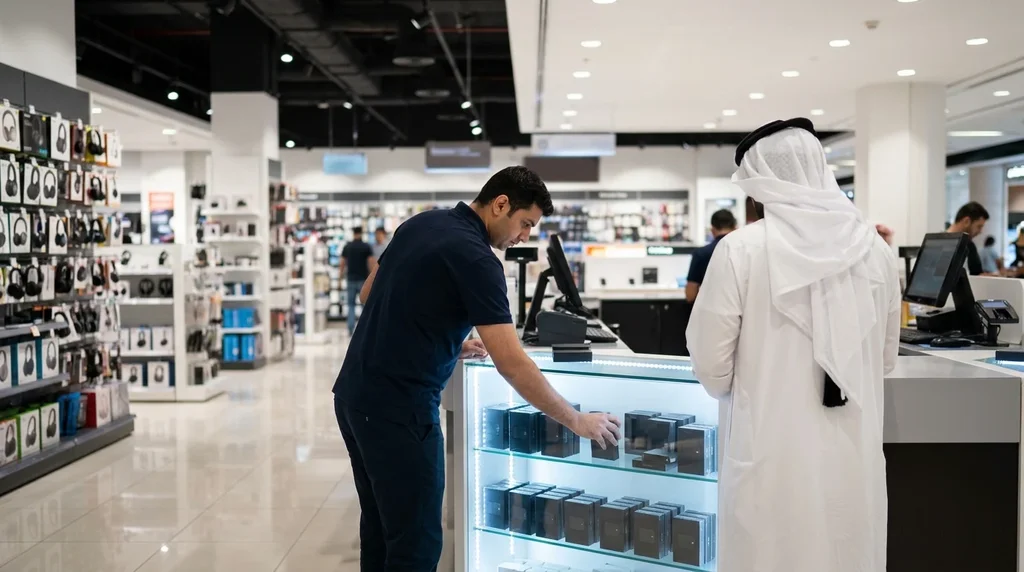
Two customers of Ledger, the French maker of hardware crypto wallets, say they lost about $604,000 in total. Their devices, a Ledger Flex and a Ledger Stax, had been bought new at Virgin Megastore in Dubai, a chain that Ledger counts among its authorized resellers in the United Arab Emirates. Ledger has not commented on these two cases, Journal du Coin reported on November 18, 2026. These losses add to a series of wallets tampered with after they left the factory.
What the two Dubai victims say
The first case was reported on November 15, 2026 on X by a user named Rewinsky. According to Journal du Coin, about 1,300 SOL left his Ledger Flex. The next day, he opened the casing, posted photos and named the Virgin Megastore in Dubai as the place of purchase.
The second case weighs more heavily. The account New Babylon Order Worldwide says that 507,000 USDT left its Ledger Stax on November 14, 2026. The device was reportedly bought new from the same chain on October 11, 2026. Its owner insists he never entered his recovery phrase anywhere other than on the device. He has filed a complaint and asked Tether, the issuer of USDT, to freeze the funds. Neither Virgin Megastore nor the Dubai police had responded publicly by the morning of November 18, according to Journal du Coin.
The level of evidence differs from one device to the other. Mark Karpelès, former head of the Mt. Gox platform, keeps a public register called Ledger Implant OSINT. On the photos of the Flex, he points to an antenna and an added board, and classifies the device as a "confirmed implant". For the Stax, with no photo of the inside, he sticks to "suspected implant". Ledger has validated neither of these two analyses.
An authorized reseller, not a grey market
The place of purchase changes the scope of the affair. Until now, Ledger had only confirmed thefts on devices sold in Southeast Asia, according to Journal du Coin. In its response published on October 15, 2026, the manufacturer speaks of a "localized distribution attack". A criminal group allegedly bought genuine devices, opened them and fitted them with hidden components, then put them back on sale through resellers in the region.
Ledger says its chip, its operating system and its servers have not been compromised. It says it sent teams to buy and open devices in stores, notably in Germany, and found no modified unit. The same day, it restated or tightened the rules of its authorized network:
- Ledger products no longer go on shelves or in display cases; stock stays in the back room until sale;
- a returned device can never be resold, even if it looks new and sealed;
- the reseller reports without delay any device a customer considers abnormal.
Our reading: the Dubai Stax was reportedly bought on October 11, 2026, before these new instructions. They therefore say nothing about the current state of the chain's stock.
Four hotspots reported since October
Europe has already had its alert. On October 13, 2026, MediaMarktSaturn, parent company of the electronics chain MediaMarkt, pulled Ledger products from its stores and websites. "The products have been removed from our assortment internationally, in all our countries," a spokesperson told Cointelegraph, describing it as a precautionary measure.
| Location and channel | What is reported | Ledger's position |
|---|---|---|
| Southeast Asia, reseller CryptoBilis | $102 million drained from 324 wallets according to Bitquery, as of October 15 | Attack confirmed, described as "localized"; the Bitquery figure is neither confirmed nor disputed |
| Germany, two MediaMarkt stores | A customer, Johannes, describes unauthorized cables and cellular modules in two devices | No loss of funds reported in this case |
| Singapore | A Ledger Flex bought at the airport contained a spy implant, according to Mark Karpelès; on October 28, police confirmed at least two victims for 3.5 million Singapore dollars | No direct response on the airport case |
| Dubai, Virgin Megastore | About 1,300 SOL and 507,000 USDT gone, or about $604,000 according to Journal du Coin | No comment |
The phenomenon does not affect Ledger alone. Trezor found unauthorized components in three Safe 5 devices that went through CryptoBilis and cut its reseller network by about 80%, according to Journal du Coin. 2clics covered the suspected implant at Trezor, reported on October 30, 2026, and Trezor's decision to tighten its resellers. Mark Karpelès's register now lists 20 reported devices at 10 sellers.
Ledger: what a buyer in Switzerland should check
Ledger mentions no case in Switzerland in its October 15 response. The precautions below come from the secure purchase page published by the manufacturer.
- The purchase channel. Ledger recommends buying on Ledger.com or from a reseller listed in its official register. On Amazon, the seller's name must match the official Ledger store for the country.
- The packaging. An opened or altered package should not be used: the manufacturer asks you to contact its support.
- The authenticity check. The Genuine Check runs in the Ledger Wallet app downloaded from the official website or from the official app stores. It certifies the secure chip, but Ledger admits it does not detect a physical modification such as an implant.
- The recovery phrase. A Ledger device never arrives with a phrase or PIN code already set up. A phrase supplied on a card or in the instructions must never be used.
The Dubai case shows the limits of these rules. A new device, bought from an authorized reseller, may have been tampered with. Ledger says as much itself: no global supply chain is entirely safe from sophisticated interception.
What to do if your Ledger comes from a reseller
For a possibly compromised device, Ledger recommends transferring the funds to a trusted wallet, with a new recovery phrase. It asks users to contact its support and the authorities before opening the casing or sending it to a third party.
Scammers exploit this kind of alert. Ledger warned Rewinsky against fake fund recovery services. The manufacturer points out that it never contacts its customers by phone, text message or mail, and that the 24 words are only ever entered on the device. A fake Ledger update was already targeting the recovery phrase in October.
Looking ahead, Ledger is betting on a new model. The Ledger Atom, announced at 849 euros with anti-opening sensors, will only be sold on its official website, according to Journal du Coin. Deliveries are expected in summer 2027. The Nano X, Flex and Stax already in circulation do not have these protections.
What we don't know yet
- Whether Ledger will confirm the presence of an implant in the two Dubai devices, and at what stage they were modified.
- Whether Tether has frozen the 507,000 USDT, as their owner requested.
- When MediaMarktSaturn will put Ledger products back on sale: the group gave Cointelegraph no date.
Sources
- Journal du Coin: "Ledger : l'affaire des wallets piégés gagne Dubaï", November 18, 2026
- Ledger: "Ledger's Response to the Hardware Implant Attack", October 15, 2026
- Ledger Academy: "Best Practices To Securely Buy Your Ledger Signer", updated September 18, 2026
- Cointelegraph: "MediaMarkt Parent Pulls Ledger Wallets Amid Tampering Reports", October 13, 2026
- 2clics.com: "Trezor: suspected implant in a Safe 5 sold by CryptoBilis", October 31, 2026