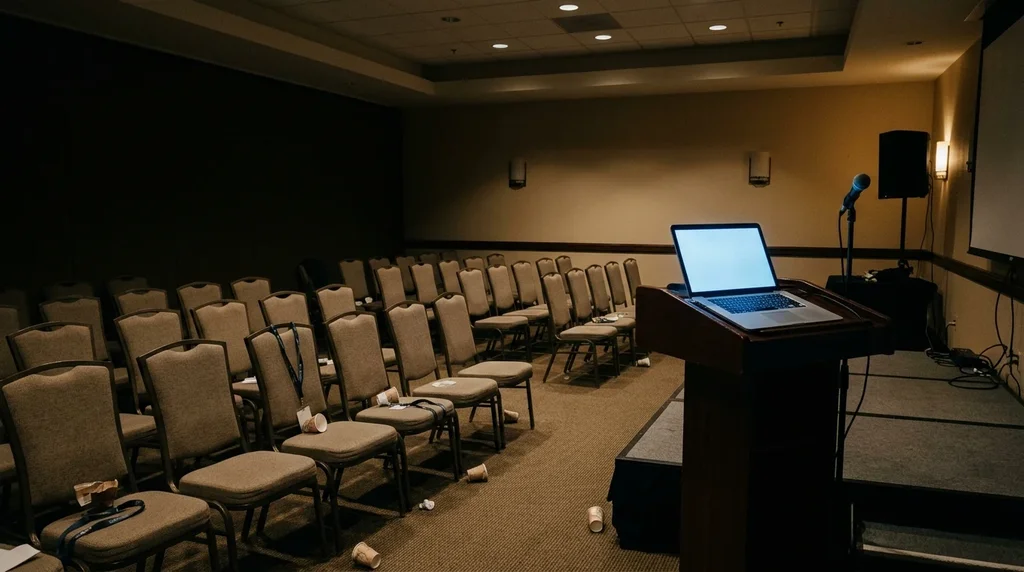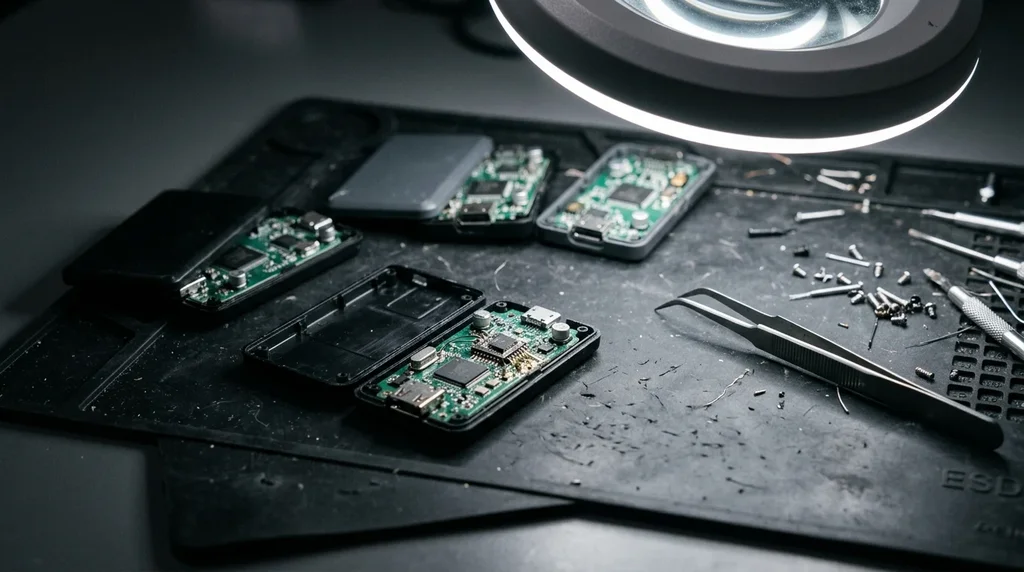
On October 9, the FBI arrested Abdulrahman Alfozan, an engineer at OpenAI since July 2025. He is suspected of hiding an encrypted audio recorder behind the television in a meeting room used by the company’s leadership at its San Francisco offices. US prosecutors are charging him with attempted interception of oral communications. He is presumed innocent.
What the complaint describes
According to the complaint as summarized by the US Department of Justice, and reported by Journal du Coin, OpenAI employees discovered around September 30 a small device plugged into the USB port on the back of a television set, wrapped in toilet paper. Its contents are encrypted and cannot be read. Investigators date its installation to September 28.
The room hosted confidential technical, commercial and strategic discussions. Surveillance cameras show the engineer nearby on several occasions before the discovery, even though he had neither access to the room nor an invitation to the meetings held there. On October 5, he allegedly returned to the room and looked behind the television. That same day, he allegedly left a bag behind in another room. OpenAI’s security team found in it a second recorder almost identical to the first, along with his wallet and his ID.
Traces left in digital tools
The complaint also relies on his use of computer tools. Before the device was installed, the suspect allegedly queried an internal productivity tool about building addresses, meeting rooms, their capacities and their schedules. He also allegedly asked where the leadership and outside partners met.
Investigators are also looking into a chatbot account opened in his wife’s name, which shared several identifiers with his own. Between September 24 and 30, this account allegedly asked questions about building an audio recorder that runs continuously, adding a Wi-Fi connection, improving live listening and encrypting its SD card. On September 27 and 28, the questions concerned the device’s custom header and its MAC address, the unique identifier that every piece of network equipment has. The complaint does not specify which chatbot was involved.
What OpenAI says
OpenAI commented on X on October 13: “We discovered a sophisticated recording device hidden in one of our offices. We used our models to understand the device and where it came from, and determined that a specific employee had planted it a few days earlier. We referred the matter to the FBI.” The company did not detail what its models analyzed to reach this identification.
It says it has so far no indication that its model weights (the learned parameters that form the core of an AI), its source code or its customers’ data were exfiltrated. The engineer has been fired.
On the authorities’ side, FBI Director Kash Patel considers that protecting American innovation in superintelligence is essential to the country’s security and makes it a counterintelligence priority. Federal prosecutor Craig Missakian calls it a matter of national security. The suspect, a 35-year-old Saudi national, faces up to five years in prison, a $250,000 fine and three years of supervised release.
In early October, OpenAI had already fired three AI safety researchers, Jasmine Wang, Tomek Korbak and Mikita Balesni, for violating its rules on sensitive information. Nothing officially links the two cases.
Insider threat, a risk of its own
Beyond the individual case, whose outcome is for the courts to decide, the affair illustrates a category of risk that IT protections alone cannot cover: the insider threat. An employee has a badge, an account and knowledge of the premises. A firewall cannot see a device slipped behind a screen. The complaint mentions a physical discovery, video surveillance and a forgotten bag; OpenAI, for its part, says it identified the employee thanks to its models.
The other lesson concerns digital traces. Queries sent to an AI assistant, whether internal or consumer-facing, are retained by the provider and can be cross-checked. In this case, they are among the evidence held against the suspect. For companies, in Switzerland as elsewhere, that make such tools available to their teams, these logs are therefore both a means of detection and sensitive data in their own right, and access to them and their retention are best clearly regulated.
Sources
- Journal du Coin: “Espionnage chez OpenAI : un ingénieur arrêté par le FBI, démasqué par l’IA maison”