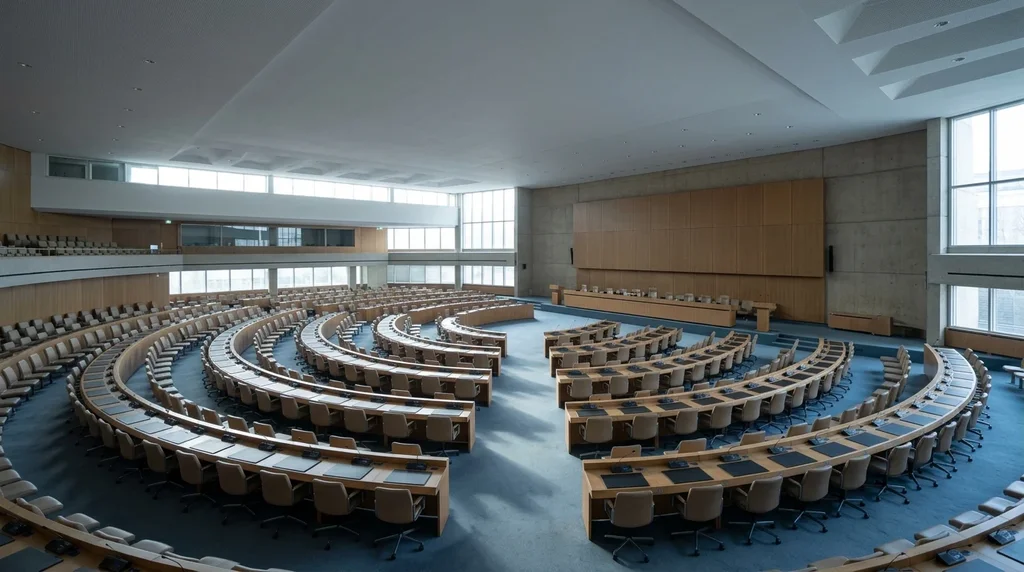
The UN Human Rights Council on Tuesday adopted in Geneva its first resolution devoted to artificial intelligence. The text, adopted by consensus according to the Keystone-ATS news agency as reported by SWI swissinfo.ch, warns against the threats that AI systems pose to human rights and lists a series of safeguards. Before drawing any conclusions, however, it is worth clarifying who is speaking, to whom, and with what force.
Who adopted what
The author of the text is the Human Rights Council, the UN body that sits in Geneva. It is a resolution, adopted by consensus. It is addressed above all to States, as well as, on certain points, to the UN itself and to other actors. The Council also adopted by consensus a second resolution, likewise unprecedented, which calls on States to protect the human rights of women and girls in the context of digital technologies, in particular by preventing gender-based violence facilitated by these technologies.
The safeguards called for
According to swissinfo.ch’s report, the resolution sets out several principles:
- International law across the entire life cycle: AI systems must comply with it at every stage, from their design to their use.
- A ban on uses contrary to human rights: any application that does not respect human rights should be prohibited.
- Human rights in national frameworks: States are urged to take into account the impact of AI on human rights when they adopt legislative and regulatory frameworks; they must combat discrimination and other negative effects.
- Human oversight: any decision involving AI must be supervised by a human being, and responsibilities must be clearly defined.
- Open governance: all countries, including developing countries, should be able to take part in discussions on AI regulation.
- Coordination and digital public goods: the text calls for stronger international collaboration, greater coherence between the various initiatives and the promotion of digital public goods, in particular access to digital infrastructure.
What scope?
The swissinfo.ch report sets out what the resolution calls for, but it does not specify its legal scope or how States are expected to implement it, and it mentions no monitoring mechanism or sanctions.
The planned next steps are procedural: the Office of the High Commissioner for Human Rights is to submit a report within a year, and the Council is to return to the issue of AI next June.
What this means for International Geneva
The text was adopted in Geneva, and part of its follow-up will also take place there. According to swissinfo.ch, the question of the participation of all countries in discussions on AI regulation will be addressed at the next Global Summit on AI, scheduled to take place in Geneva in June. The city thus finds itself at the crossroads of two forums, the Council and this summit, both of which are due to address the subject next June.
And the Swiss debate?
On this point, the source is silent. It specifies neither the position Switzerland defended during the negotiations nor how the resolution might fit in with work on AI regulation in Switzerland. It would therefore be premature to see it as a decision or a policy direction of the Swiss Confederation. What can be said is that Switzerland, like other States, is among those to whom the call to integrate human rights into their legislative and regulatory frameworks on AI is addressed.
Nor does the report refer to the official text of the resolution. We will add the link to the primary document as soon as it has been identified.