Four projects born in Geneva's higher education institutions are getting a boost from the FIF, the Canton of Geneva's innovation funding programme. dEEGtal and S-SENTIA each receive 100,000 francs, Juturna Bio and Pixels Métallurgiques 50,000 francs each, according to the press release relayed on 22 October 2026 by Startupticker.ch. For a Geneva startup, it is a useful reminder: the next application deadline falls on 4 November 2026.
This is not a funding round with investors. This is support awarded by an innovation programme, on application. In total, the four projects share 300,000 francs.
dEEGtal and S-SENTIA: 100,000 francs in FIF Seed Tech
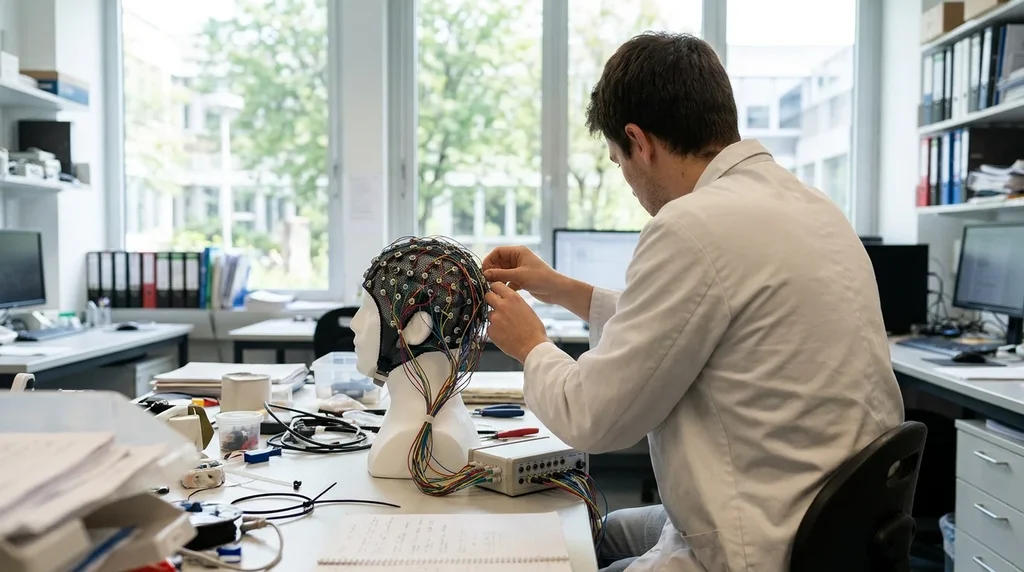
dEEGtal analyses electroencephalograms (EEG) with artificial intelligence to refine the diagnosis of epilepsy. The software stems from research carried out at the Geneva University Hospitals (HUG). The company is based at the Wyss Center for Bio and Neuroengineering, on the Campus Biotech.
According to the press release, the tool helps neurologists even when interictal epileptiform discharges are absent from the recording. dEEGtal had already received a FIF Grant in 2022. The 100,000 francs will go towards regulatory work, a first entry into the US market and distribution partnerships.
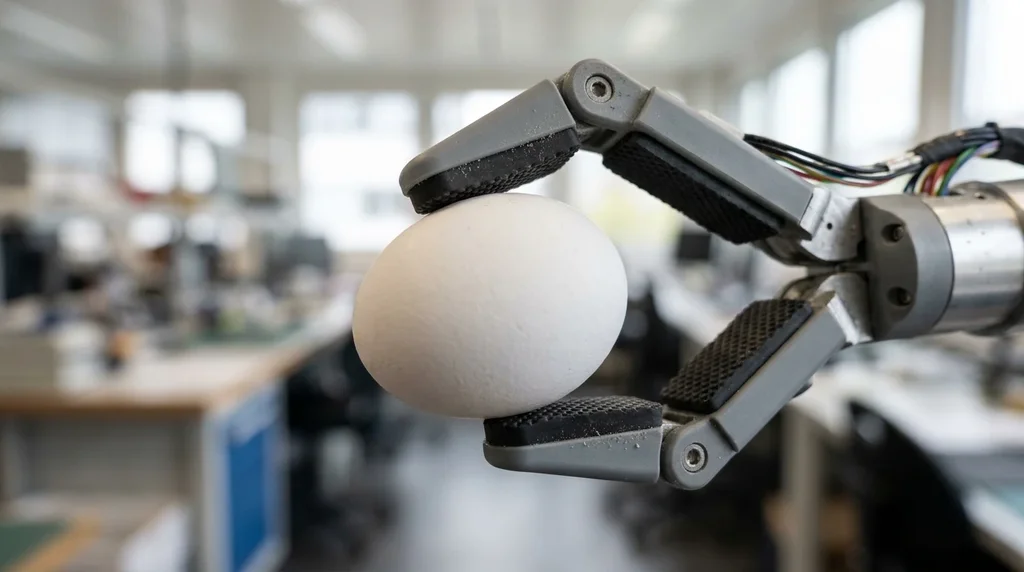
S-SENTIA, a spin-off of the University of Geneva, designs a semiconductor detection chip. It combines silicon detectors and integrated electronics to capture weak, fast signals. The targeted uses: 3D vision for robotics and autonomous mobility, medical imaging and radiation detection.
The technology is designed for standard semiconductor manufacturing processes, which paves the way for industrial production. S-SENTIA had obtained a FIF Grant in 2025 and takes part in the CERN Venture Connect programme. The new funding is meant to advance the chip's development and its industrialisation.
Juturna Bio and Pixels Métallurgiques: 50,000 francs in FIF Grant
Pixels Métallurgiques comes from the Advanced Technology Laboratory, a collaboration between the University of Geneva and HES-SO Geneva. The project decorates watch components with a laser: the beam fuses a fine powder onto the metal surface. According to the press release, this method avoids the surface degradation that conventional laser engraving can cause.
The FIF Grant will allow the project to acquire its own laser equipment. It is a step towards scaling up production and industrial application.
Juturna Bio is a spin-off of the Swiss Federal Institute of Technology in Lausanne (EPFL), based at the Campus Biotech in Geneva. It works on therapies aimed at restoring the function of ageing brain cells, with Alzheimer's disease as its first target. Its method, epigenetic reprogramming, acts on the chemical marks of DNA without altering the genetic code.
The funding will support a translational proof of concept. This stage is meant to show whether laboratory results can be pursued towards future treatments. Nothing guarantees an application in patients at this stage.
The four winners at a glance
| Project | Origin | Technology | Instrument | Amount |
|---|---|---|---|---|
| dEEGtal | HUG research, Wyss Center | AI-based EEG analysis | FIF Seed Tech | CHF 100,000 |
| S-SENTIA | University of Geneva spin-off | Detection chip for 3D vision | FIF Seed Tech | CHF 100,000 |
| Pixels Métallurgiques | University of Geneva and HES-SO Geneva | Laser decoration of metal for watchmaking | FIF Grant | CHF 50,000 |
| Juturna Bio | EPFL spin-off, Campus Biotech | Epigenetic reprogramming against brain ageing | FIF Grant | CHF 50,000 |
How the FIF works in Geneva
The FIF aims to accelerate innovation in the Geneva economy, according to the programme's page on the website of the Geneva Foundation for Technological Innovation (FONGIT). It is aimed at projects from the University of Geneva, the universities of applied sciences (HES) and Geneva research institutes, CERN included. Technology startups, scale-ups and SMEs listed in the Geneva commercial register can also apply.
The programme offers three instruments, in three areas: Tech, Digital and Impact.
- FIF Grant: up to 50,000 francs;
- FIF Seed: up to 100,000 francs;
- FIF Growth: up to 400,000 francs.
The FIF is supported by the State of Geneva, FONGIT, the Modus Foundation, the United Nations International Trade Centre (ITC) and the United Nations Environment Programme. It favours scientific and technological innovation that meets environmental, social and governance (ESG) criteria, especially when it contributes to the Sustainable Development Goals.
FONGIT follows each application, drafts an assessment with a recommendation and passes it on to the selection committee, which makes the decision. This committee has ten members: two representatives of the FONGIT foundation board, two from the University of Geneva, two from HES-SO, two from the State of Geneva and two independent members. FIF support is independent of FONGIT's other programmes.
Geneva startups: how to apply to the FIF
The timetable is tight. Applications must arrive by 4 November 2026 at the latest, and the selection committee meets on 9 December 2026, according to the FIF page. The application form is on the FONGIT website.
For a young company that is hesitating, FONGIT offers a support programme to help build the application. The FIF's internal regulations are only available in French. Our guide to raising funds as a startup in Switzerland sets out the stages and players in financing.
Funding in stages
The paths of dEEGtal and S-SENTIA show a step-by-step logic. Both companies had first received a FIF Grant, in 2022 and in 2025, before securing a FIF Seed Tech of 100,000 francs. The next stage, FIF Growth, can reach up to 400,000 francs.
The previous announcement, published on the FIF page, illustrates this. The Goodwall platform had obtained 400,000 francs in FIF Growth. Roofless Labs had received 50,000 francs in FIF Seed Tech for its K4MERA stereoscopic camera, and Infera Neuro a FIF Grant of 50,000 francs for its neural decoding chips.
On the same theme of support for innovation in French-speaking Switzerland, 2clics has also covered the FIT Foundation grants and the InnoJura 2026 cohort. All our news on funding for young companies is gathered in the startup fundraising section.
What we don't know yet
- The exact form of the support: the sources do not say whether these are subsidies, loans or another arrangement.
- The number of applications submitted and the FIF's selection rate.
- The programme's annual budget and each partner's share.
- The projects' timetable: no date is given for dEEGtal's entry into the United States or for the industrialisation of S-SENTIA's chip.