A newcomer to Swiss robotics, Zurich start-up Enact Intelligence announced on 22 October 2026 that it had raised 30 million dollars in a pre-seed round, according to Startupticker.ch. It develops robots with a sense of force and touch. The money is meant to quintuple its team by the end of 2027 and bring its first robots to industrial partners.
A pre-seed round of rare size
The amount is surprising for a first round. Pre-seed funding usually covers a company's very first steps, even before the seed stage. To raise funds, a Swiss startup then goes through Series A, B or C rounds.
The press release presents this round as one of the largest ever raised in Europe at this stage. However, it gives no ranking in figures to back up this claim.
The round brings together three venture capital funds: redalpine, Notion Capital and firstminute capital. They are joined by three well-known individual investors:
- Arthur Mensch, founder of Mistral;
- Yann LeCun, founder of AMI Labs and former chief artificial intelligence (AI) scientist at Meta;
- Andrew Lonsberry, founder of Path Robotics.
What the technology does: sensing force, not just seeing
Enact starts from an observation about today's robots. Most of them understand their environment mainly, or even solely, through vision. According to the company, this limits their ability to handle objects and to learn from experience.
Adding force and touch sensors is nothing new. But according to Enact, these solutions remain too expensive and too fragile for industry. The start-up therefore wants to rethink the entire chain, from AI models to motors and sensors.
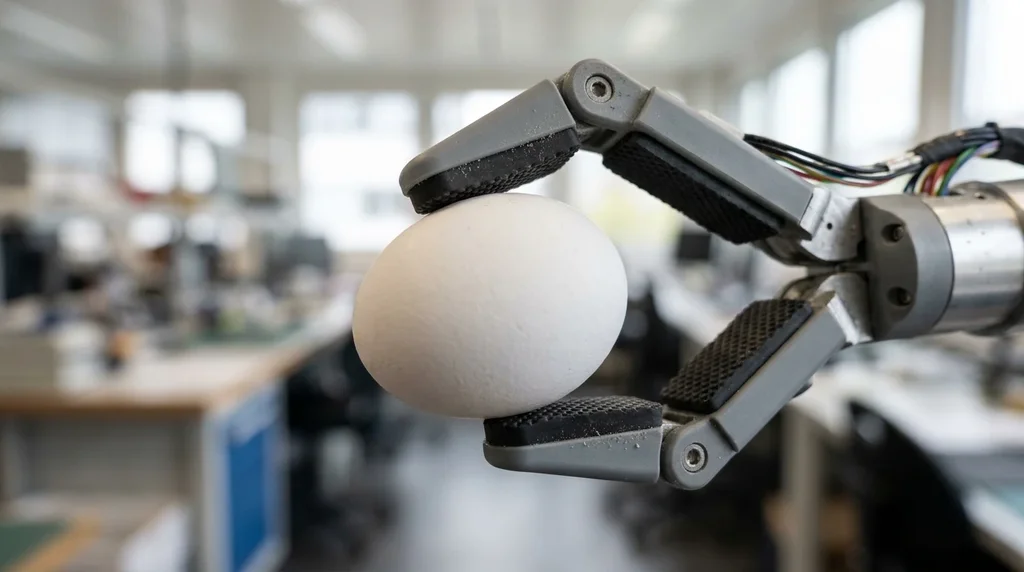
Its central idea: measure force in the actuators themselves, that is, in the motors that make the robot move. An expensive sensor measures force at a single point only. Enact compares its approach to humans, who feel effort through the tension of their muscles, not just through their fingertips.
The founder, Manuel Yves Galliker, explains that he wants to start from existing models, such as video models. The aim is to adapt them so that they produce robot actions. The company claims that its approach will work for all form factors, from a simple arm to a humanoid robot.
These elements should be read for what they are: a description of the goal. The press release cites no scientific publication, no demonstration backed by figures and no robot already in service.
What the 30 million dollars is meant to fund
The company announces three uses for this funding round:
- increasing its team fivefold by the end of 2027;
- accelerating hardware development and research and development;
- deploying its first robots with industrial partners.
Enact says it is in talks with major European industrial companies. It names four sectors: manufacturing, infrastructure, retail and food processing. No names are given, and no contract is announced.
A team from 1X, DeepMind and Physical Intelligence
Enact was founded in March 2026 by Manuel Yves Galliker. He led the software team for the NEO humanoid robot at 1X. He also helped build 1X's AI team in Silicon Valley, then worked at the Physical Intelligence lab.
The team has twelve people. Its engineers come from DeepMind, 1X, Amazon Robotics, Helsing and Physical Intelligence, among others. Philip Kneis, until now a deeptech investor at redalpine, is joining the company to steer its growth.
The choice of Zurich over the San Francisco area is deliberate. According to the founder, Silicon Valley is short of robotics and hardware engineers, and "a lot of money is chasing few people". For Kamil Mieczakowski, partner at Notion Capital, the Zurich region has become "the Silicon Valley of robotics".
How this amount compares within Swiss robotics
This round is part of an already active ecosystem. A feature on Swiss robotics facing China recalled its strengths: research at EPFL and ETH Zurich, and a precision industry. It also pointed to a lack of domestic growth capital.
The table compares Enact's round with other recent funding rounds reported by 2clics. The rounds are not at the same stage: they give an order of magnitude, not a ranking.
| Company | Field | Round | Amount |
|---|---|---|---|
| Enact Intelligence (Zurich) | Force-sensitive robots | Pre-seed, October 2026 | 30 million dollars |
| Flexion (Zurich) | "Brain" for humanoid robots | 2025 round | 50 million dollars |
| ANYbotics | Quadruped inspection robots | Total raised since 2016 | About 120 million francs |
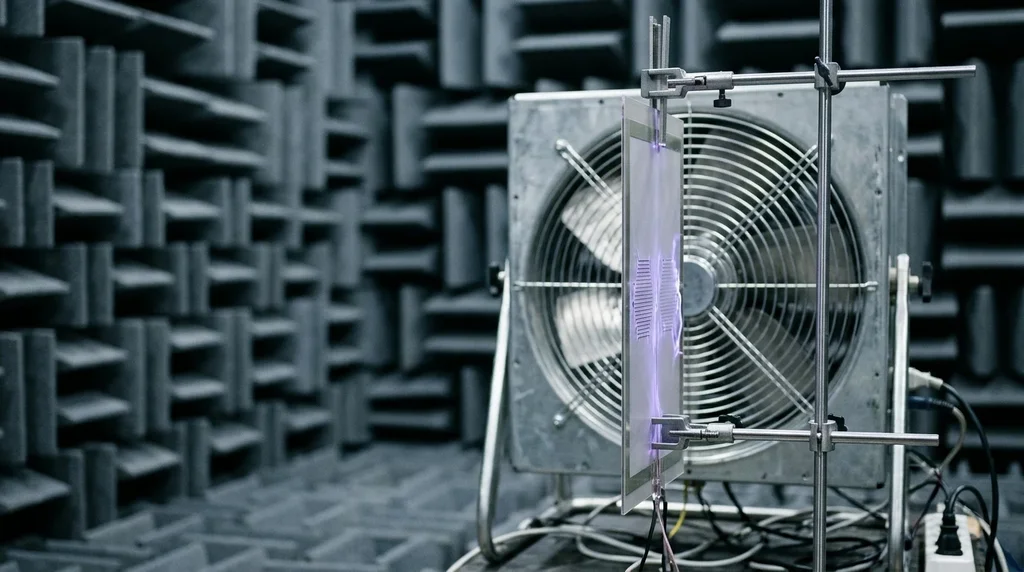
| Sonexos (Lausanne) | Plasma-based noise reduction | Pre-Series A, October 2026 | 5 million francs |
| Nouscom (Basel) | Cancer immunotherapy | Series D, October 2026 | 135 million dollars |
The comparison shows the gap. From its very first round, Enact is raising far more than Sonexos to reduce noise, even though Sonexos is at a more advanced stage. It remains far from Nouscom's Series D, a biotech preparing a clinical trial.
The global context also sheds light on this figure. According to CB Insights, the average round worldwide, across all stages, reaches 49.8 million dollars in 2026. In AI, it rises to 91.3 million. KPMG also expects faster growth in physical AI and robotics.
Other cases are collected in our startup funding rounds section.
What we don't know yet
- Enact's valuation and the share of capital sold to investors have not been published.
- The press release does not say which fund is leading the round, nor how the 30 million is split.
- The industrial partners remain anonymous: these are talks, not orders.
- No deployment timetable and no measured technical results have been disclosed.
- The claim of one of the largest pre-seed rounds in Europe is not backed by any comparative figures.
For a start-up founded in March 2026, what comes next will hinge on one specific point: showing that a robot that senses force can work reliably in a factory.