In Switzerland, 66% of young people aged 12 to 19 regularly get information through artificial intelligence (AI), compared with 22% in 2024, according to the JAMES 2026 study presented on November 19, 2026. In the same week, the Alps supercomputer held on to 10th place worldwide on November 16, and the Federal Office of Police (fedpol) ordered a deepfake detector for CHF 4.44 million. Here are the week's Swiss AI figures to November 23, 2026, drawn from 2clics.com articles.
Research: young people, AI and public computing
Two publications dominate research this week: a survey on how young people use AI and the global ranking of supercomputers.
| Figure | What it measures | Article |
|---|---|---|
| 66% | Share of 12- to 19-year-olds who regularly use AI to get information in 2026, compared with 22% in 2024 | JAMES study on AI |
| 44% versus 23% | Well-off and low-income households that have an AI subscription | JAMES 2026 study, same article |
| 434.9 petaflops | Measured performance of Alps, 10th in the November 2026 Top500, unchanged since June | Alps supercomputer in the Top500 |
| 27 new systems | New entries in the Top500, or 5.4% of the list, the lowest level in its history | Top500, same article |
The JAMES study is conducted by the Zurich University of Applied Sciences (ZHAW) for Swisscom, the telecommunications operator. The 2026 edition is based on 1088 young people, surveyed from late April to mid-June 2026. The 66% figure refers to regular use as reported by the young people themselves. It says nothing about the accuracy of the answers they receive.
The gap between well-off and low-income households is an established finding. The "divide in AI literacy" that Michael In Albon, Swisscom's youth media protection officer, draws from it remains a warning: the study does not measure young people's skills according to their subscription.
Alps belongs to the Swiss National Supercomputing Centre (CSCS) in Lugano. The ranking was published on November 16, 2026 at the SC26 conference in Chicago. Alps is ahead of Finland's Lumi, measured at 379.7 petaflops, and provides the computing power for the Swiss AI Initiative, the joint programme of the Swiss Federal Institute of Technology in Lausanne (EPFL) and ETH Zurich.
Tools and models: Apertus and the fight against deepfakes
| Figure | What it measures | Article |
|---|---|---|
| 262,144 tokens | Maximum context of Apertus 1.5, four times the 65,536 tokens of version 1.0 | using the Apertus model |
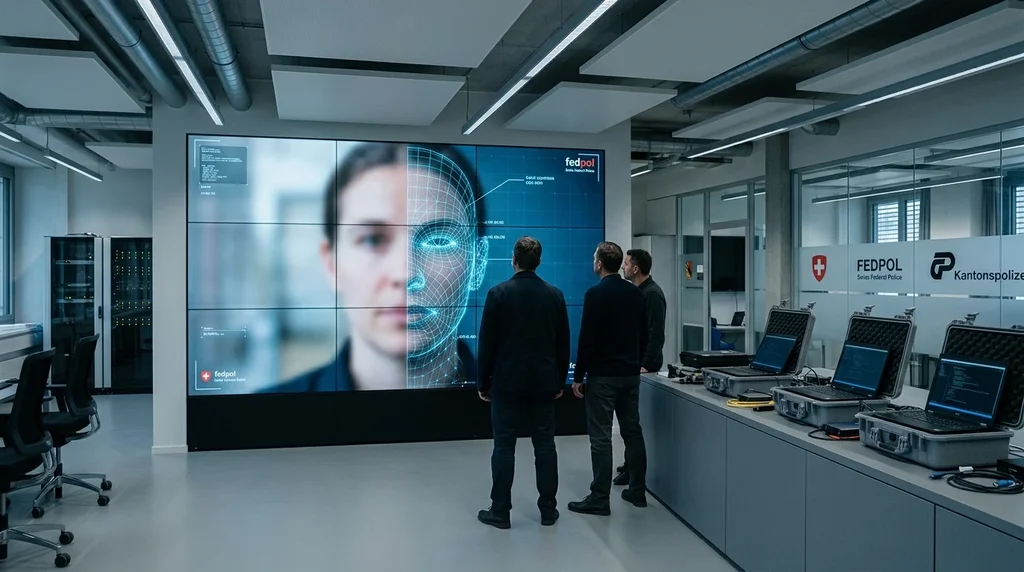
| CHF 4.44 million | Contract for the "Face Deepfake Detector" awarded by fedpol to ELCA without a tender | deepfake detector for the e-ID |
Apertus is the open language model of EPFL, ETH Zurich and CSCS. Its version 1.5, released on July 24, 2026, comes in two sizes, 8 and 70 billion parameters. It accepts text, images and audio, under the Apache 2.0 licence, which allows commercial use.
ELCA, an IT company based in Pully (VD), already supplies the e-ID online verification system, which it won in December 2024 for CHF 13.8 million. The new module is meant to spot selfie videos fabricated by AI. Its basic mandate runs from January 2027 to March 2036, according to ICTjournal on November 20, 2026.
Swiss AI in business: what training costs
| Figure | What it measures | Article |
|---|---|---|
| CHF 9,200 | Six-month AI certificate from the Geneva School of Business Administration (HEG-Genève), registration included | training your employees in AI |
| CHF 1,500 | Two-day EPFL course for executives without a technical background, at the price of its latest edition | AI training, same article |
| 21,000 people | UBS employees who had completed the internal "UBS AI Citizen" programme by July 2026 | AI training, same article |
Prices range from zero to CHF 9,200. The introductory day offered by the Canton of Geneva together with the University of Geneva is covered for Geneva SMEs that attend it in full. At the major bank UBS, the more than 21,000 graduates of the internal programme represented 28% of the workforce.
What the week says about AI trends in Switzerland
Use is advancing faster than mastery. Among young people, regular use to get information has tripled in two years. In companies, 89% of respondents to a May 2026 survey by the consultancy EY use AI every day. Training is following, but unevenly: a mass programme at UBS, paid courses or subsidised days elsewhere.
Trust is becoming a technical project. ELCA's contract responds to a risk identified during security checks: generative AI makes it possible to fabricate a realistic selfie video from a single photo. The e-ID still has no launch date.
Swiss public computing is holding its rank, without moving up. Alps has not budged since June 2026. The Top500 authors place the new computing power in the "AI factories" of the cloud giants, largely absent from the ranking. Alps' 10th place therefore does not compare it with the private clusters behind the major commercial models.
To put these figures in perspective over time, our AI barometer of November 14 brings together those of the previous week.
What we don't know yet
- The breakdown by age and language region of AI use in the JAMES 2026 study: Swisscom's press release does not provide it.
- The effectiveness of ELCA's detector: neither fedpol nor the company has published a detection rate.