Zurich start-up Tivano has secured a CHF 500,000 deployment grant from REPIC, Startupticker.ch reports. The money is meant to help it scale up in Namibia, where it removes invasive woody biomass and buries it in underground vaults so that the carbon it contains does not return to the atmosphere.
A grant, not a funding round
The announcement should be read for what it is. The CHF 500,000 takes the form of a grant (grant, in the source text). The source mentions no investors, no equity stake and no loan. This is therefore not a funding round in the sense the start-up ecosystem understands it, but targeted support for a project.
According to the source, REPIC supports the transfer of knowledge and technology from Switzerland to developing and transition countries, with a focus on renewable energy, energy efficiency and resource efficiency. Tivano's project meets its funding criteria. The grant is meant to support the move of its carbon removal operations from the demonstration phase to large-scale deployment.
The starting problem: bush encroachment
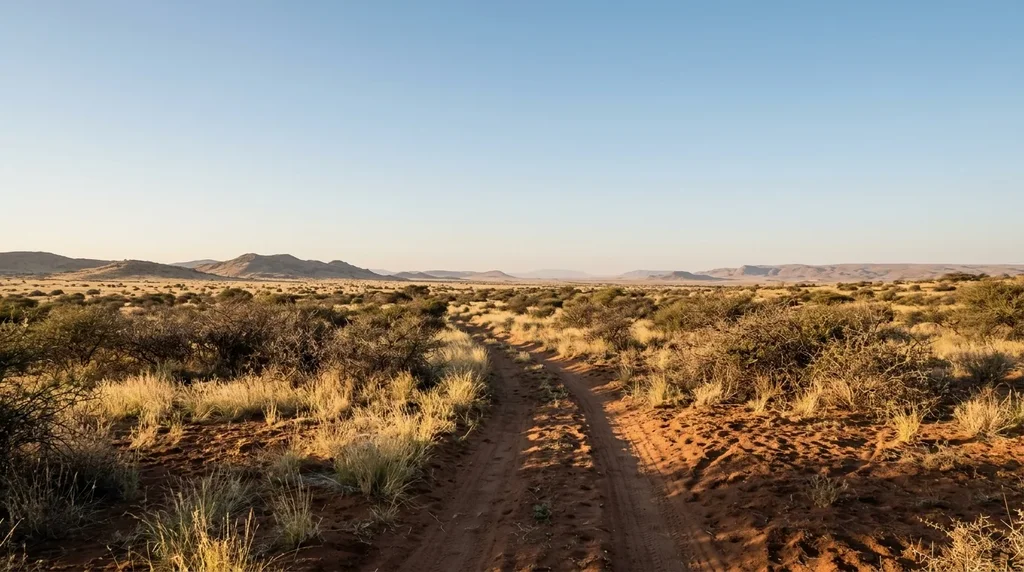
In Namibia, bush encroachment is a major challenge: native woody plants, trees and shrubs, spread densely and aggressively across grasslands, savannas and grazing land, at the expense of grasses and the herbaceous layer. The result is large volumes of surplus biomass, which is usually burned or poisoned, releasing CO₂.
This is where Tivano, an ETH spin-off, comes in. The company selectively removes unwanted woody vegetation, then stores the processed biomass in underground vaults, physical structures buried in the ground. The aim is to prevent it from decomposing and thus releasing its carbon for centuries. The vaults are fitted with sensors for continuous monitoring. According to the source, the approach also allows native grasses and savanna ecosystems to recover.
What the Dragonfly project has already shown
Tivano's Dragonfly project in Namibia served as a demonstration. According to Startupticker.ch, 120 hectares of land were restored there alongside the carbon removal activities. More than 1000 tonnes of CO₂ have already been removed, earning the company 1049 carbon removal credits via Puro.earth. These credits are certified under Puro.earth's Terrestrial Storage of Biomass methodology, with a durability of more than 100 years.
The company also says it works with local partners, thereby contributing to employment and economic activity in the region.
What business model?
The press release does not detail Tivano's business model. Its logic can nevertheless be seen: each tonne of CO₂ removed and durably stored gives rise to removal credits certified by a third party, Puro.earth. The source does not say who these credits are intended for, nor at what price.
This is precisely one of the announced uses of the grant: helping to develop the operating model needed for larger-scale deployment. In parallel, Tivano is advancing the Butterfly project in Namibia, whose Butterfly 1 carbon vault is under construction. REPIC's support is meant to speed up this work.
A start-up founded in 2024
Tivano was founded in 2024 in Zurich. It is currently taking part in UPortunity, ETH's start-up accelerator, sponsored by UBS.
Sources
- Startupticker.ch: "Tivano secures CHF 500k to accelerate CO2 removal across Namibia"