UniSieve, a Zurich deeptech company developing high-precision membranes for industrial gas separation and carbon capture, has announced a $9 million Series A. According to the press release published by Startupticker.ch on October 8, 2026, the round brings the total funding raised by the start-up since its founding to $25 million.
A round led by the Orano Venture Fund
The round is led by the Orano Venture Fund, managed by Supernova Invest. It brings together new and existing investors: the Amadeus APEX Technology Fund, Founderful, Zürcher Kantonalbank and Guenat Holding. The press release discloses neither how the amounts are split among these participants nor the company's valuation.
This is a funding round, not an industrial partnership or a product launch: no named customer contract is announced on this occasion.
The problem targeted: energy-hungry separations
Fuels, fertilizers, plastics: much of industry relies on the same basic operation, separating molecules from one another. According to the press release, these separation processes account for roughly 10 to 15% of global energy consumption. The company sees significant room for improvement there, both for industrial performance and for cutting energy consumption and emissions.
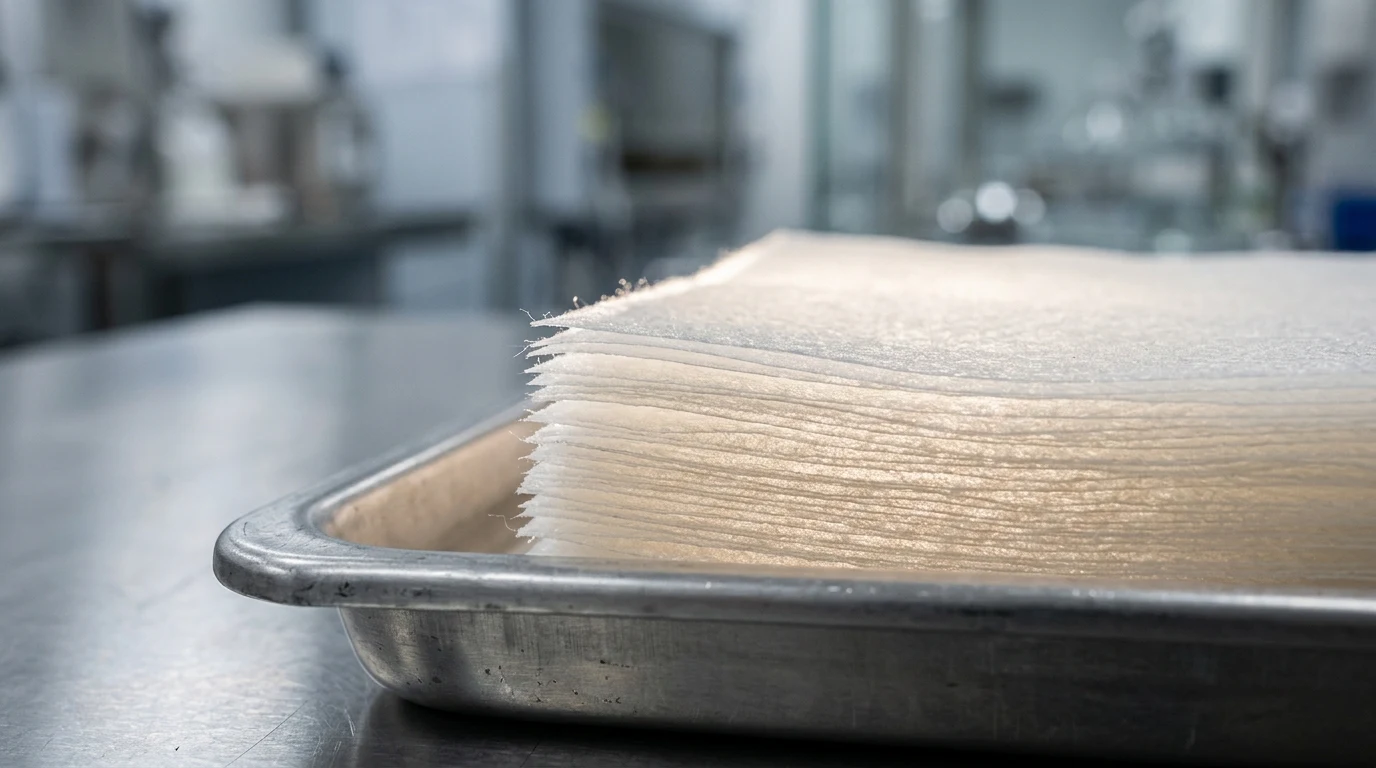
UniSieve's bet is to separate molecules without resorting to conventional thermal processes, which are considered energy-intensive. Its membranes rely on two families of materials: zeolites and metal-organic frameworks (MOFs). Their structure allows them to act as highly selective “molecular sieves”. The press release notes that MOFs were recognized with the Nobel Prize in Chemistry in 2025.
The difficulty, according to the company, lay less in the materials themselves than in putting them to use: turning these advanced materials into durable separation membranes that can be manufactured reliably at industrial scale. UniSieve says it has overcome this technological hurdle with a new class of hybrid membranes.
Two applications at the pre-commercial stage
The start-up says it has brought its technology to pre-commercial maturity in two areas: olefins, which are basic building blocks of petrochemistry, and point-source carbon capture, that is, directly on the emissions of an industrial site. For both applications, UniSieve reports reproducible manufacturing, field-validated performance and systems ready for deployment. The press release, however, quantifies neither the measured energy savings nor the number of installations in operation.
What the funding is meant to finance
The $9 million is meant to serve two goals: expanding the deployment of the technology in the markets where it is already present, and opening it up to other industrial applications. The company describes this stage as the shift from technology validation to broader commercial deployment.
In the press release, UniSieve sums up its promise as follows: its membranes would make it possible to replace energy-intensive thermal technologies with “compact and simple” solutions, so that customers recover more of their products and keep their emissions under control while spending less. “This new capital will allow us to focus on execution,” the company adds. These claims come from the company and are not backed by figures in the source.
The view of an investor coming back for more
Wolfgang Neubert, General Partner at APEX Ventures, explains why his fund is reinvesting: “We see a company on a clear trajectory, from proven technology towards meaningful commercial scale.” In his view, the addressable market spans chemicals, industrial gas separation and carbon capture, and UniSieve has moved “methodically” from pilot deployments to larger systems, with paying customers. “It is this trajectory, more than any single technical milestone, that gives us the conviction to back the team again,” he concludes.
The point is worth noting: the existence of paying customers is put forward by an investor, not detailed by the company. Neither their number nor their identity is disclosed.
Our analysis
UniSieve, founded by Elia Schneider and Samuel Hess, illustrates a profile common in Swiss deeptech: a materials technology that has made it out of the lab and must now prove it holds up in production. The funding round combines venture capital funds, a cantonal bank and a holding company, and the participation of existing investors signals a form of continuity. The next indicators to watch will be concrete ones: announced contracts, volumes of membranes produced and energy savings measured at customer sites. For now, the press release publishes none of them.