The Commission Conjoncture vaudoise has raised its growth forecast for the canton's economy. Vaud's gross domestic product (GDP) is now expected to grow by 1.8% in 2026, compared with 1.0% in the forecasts published in July. For 2027, the forecast also rises to 1.8%, from 1.5% previously, according to the commission's latest data, reported by Allnews on the basis of a BCV press release.
This is a forecast, not an observation: the year is not over and the figures announced relate to expected growth. The commission itself urges caution regarding the sector-by-sector detail: "given the high degree of uncertainty, the forecasts by sector should be treated with caution".
Who publishes these figures
Vaud's GDP and its forecasts are published by the Commission Conjoncture vaudoise, a partnership between the State of Vaud, the CVCI, the BCV and the canton's main industry associations. The calculations are carried out by economists Claudio Sfreddo, project manager since 2008, and Giuliano Bianchi, of the Institut Quantitas for economic analysis and forecasting at HES-SO. The Swiss and Vaud growth rates are adjusted for the effects of major international sporting events. The data are published four times a year; the next release is scheduled for January 2027.
A second quarter that changes the picture
The revision is explained first and foremost by the dynamic activity recorded nationally in the second quarter. The State Secretariat for Economic Affairs (SECO) made the same move at Swiss level: its growth forecast for 2026 went from 0.9% in June to 1.7% in September. For 2027, SECO kept its forecast at 1.6%. Vaud's projections are thus slightly above the national forecasts, for both 2026 and 2027.
The main driver remains domestic demand. According to the commission, its robustness, both in Switzerland and in the canton, offsets "at least in part" the effects of the lack of momentum in the global environment. At national level, the KOF economic barometer rose again in September. Activity is also benefiting from investment, notably in artificial intelligence.
Indicators still favourable
Other indicators point in the same direction. Nationally, inflation rose to 1.0% year on year in September, its highest level in two years, but it remains within the price stability range. Unemployment "remains contained", according to the commission: in September it stood at 4.9% in the canton and at 3.0% on national average. Finally, the franc has not strengthened: the euro has been stable or slightly higher since the start of the year, at 0.93 francs, while the dollar has appreciated by some 5%, to 0.83 francs.
The sectors behind the revision
In the canton, the commission's indicators show resilient business conditions in construction, services and trade. The outlook is stable, albeit mixed, in industry, while business sentiment is declining in hotels and restaurants.
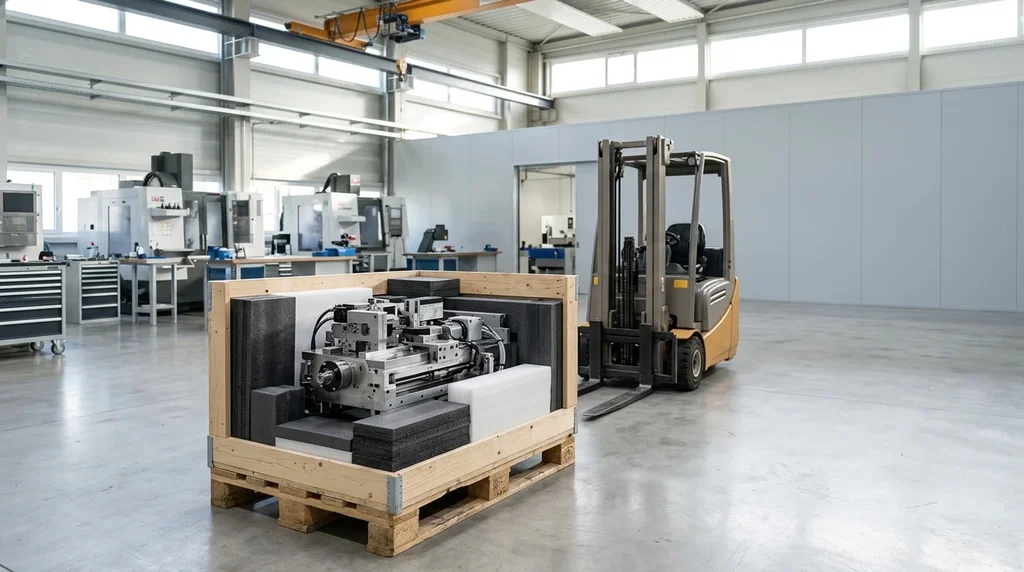
For 2026, strong growth (more than 2%) could be seen in financial services, public and semi-public services, construction, chemicals and pharmaceuticals, and hotels and restaurants. Manufacturers of machinery, precision instruments and watches could also post strong growth, a rebound after several difficult years. Business services and real estate activities, as well as wholesale and retail trade, are expected to grow moderately (between 0.5% and 2%). Transport and communications, for their part, could decline moderately.
The picture would be less uniform in 2027. Construction could see a moderate decline (between -0.5% and -2%), while chemicals and pharmaceuticals, hotels and restaurants, and transport and communications would stagnate (change of between -0.5% and +0.5%). Conversely, business services and real estate activities would move to strong growth, and manufacturers of machinery, precision instruments and watches would maintain it. Financial services and public and semi-public services would slow to moderate growth, with wholesale and retail trade remaining at that pace.
Risks that remain high
The commission stresses that the level of risk remains high: the conflict in the Middle East is dragging on, the overall geopolitical situation remains tense, US trade policy is still a source of uncertainty and, in several countries, rising prices and debt are a cause for concern. The effects of the conflict in the Middle East have, however, been mitigated by the search for alternative sources of supply and routes, the release of stocks and support measures.
The international context remains unsupportive. The latest forecasts from the International Monetary Fund (IMF), cited by the commission, point to global growth of 3.1% in 2026, followed by a slight recovery to 3.4% in 2027. The economy is relatively solid in the United States, but lacks momentum in the eurozone, despite an improvement in Germany. In many countries, inflation is rising again due to higher energy costs and moving away from the price stability range, which is also pushing interest rates up.
The Vaud and national upgrades point in the same direction and rest on the same foundation, domestic demand. They nevertheless remain forecasts, dependent on an uncertain international environment: the commission's next update, in January 2027, will show whether this scenario is confirmed.
Sources
- Allnews: "PIB vaudois: prévisions revues à la hausse pour 2026"