For Jens Fehlinger, CEO of Swiss International Air Lines (SWISS), geopolitical instability is no longer a one-off setback but a lasting feature of operations. In an interview with the website Persönlich, reported on 14 October 2026 by swissinfo.ch, the executive describes an airline facing longer routes, rising operating costs and increasingly complex flight management. Several crises, he says, are overlapping and reinforcing one another.
Crises closer together, according to management
“In the past, a major disruption occurred roughly every seven years,” the executive recalls, citing SARS, the financial crisis and the pandemic. Today, emergency situations are said to be more frequent, “as shown by the growing number of operational units and crisis teams activated by the airline”.
This claim should be read for what it is: management's assessment, based on an internal indicator whose level and trend the interview does not specify. The pace of roughly one crisis every seven years is an order of magnitude put forward by the executive, not a published statistical series.
What can be observed: longer journeys
The most visible effect comes from the conflict in the Middle East. The closure of several airspaces forces SWISS, a subsidiary of the Lufthansa Group, to constantly adapt its routings and fly longer distances. To reach Asia, the airline can currently rely on only two air corridors, or on the route over the North Pole.
The closure of Russian and Ukrainian airspace complicates the situation further, with longer flight times and inconvenience for passengers. The interview, however, puts no figure on the extra minutes of flight time or the additional kilometres: the exact scale of the detour therefore remains hard to measure from the outside.
Fuel, between fact and forecast
On top of these operational constraints comes the rise in oil prices, which feeds directly into the cost of jet fuel. “After the outbreak of the war, the cost of fuel temporarily almost doubled,” says Jens Fehlinger. The word “temporarily” matters: this was a peak, not a permanently established level, and the interview does not say where this cost stands today compared with its pre-war level.
Two time frames must also be distinguished. The consequences are already visible in the half-year results: that is a fact. That they will continue to weigh significantly on the annual accounts, on the other hand, is a matter of the airline's current forecasts, not a published result. The interview gives no figure on the scale of this impact, nor on whether these extra costs might be passed on to fares.
Weather, another source of disruption
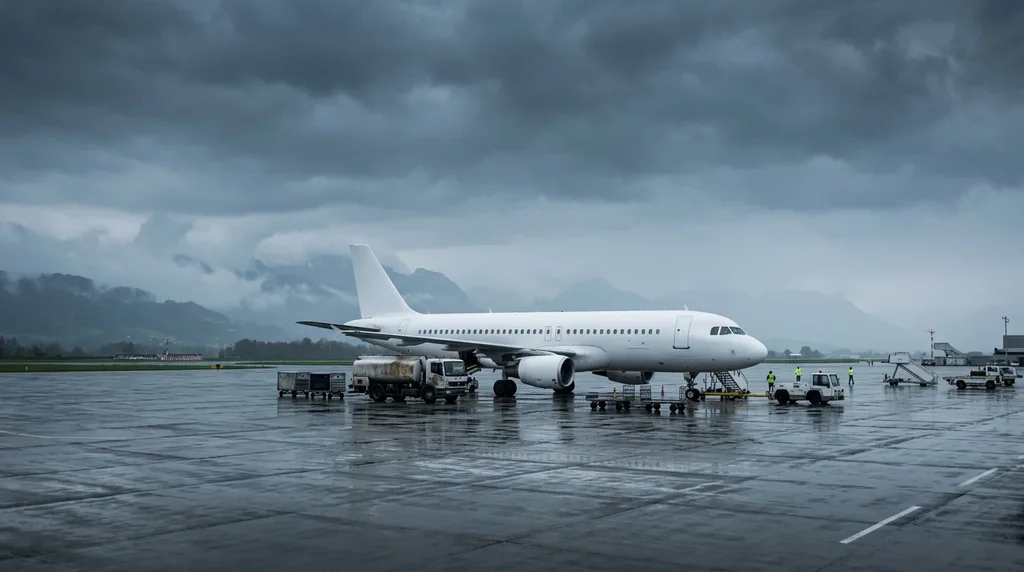
Extreme weather events are another challenge. This summer, particularly high temperatures came on top of frequent violent storms and other adverse conditions. “When severe weather makes part of the airspace unusable or disrupts operations at an airport, the effects can quickly spread across the entire air transport system,” the executive explains. For travellers, this means delays and complications in flight management.
Zurich: a status quo deemed insufficient
The 46-year-old executive, a former Lufthansa manager, also spoke about operating restrictions at Zurich Airport. He says he is satisfied with the Zurich Cantonal Council's decision not to tighten night-flight rules further, while considering it insufficient: “It's not a step backwards, but it's not a step forward either.”
In his view, Zurich ranks among the European airports most restricted in terms of operating hours and regulatory constraints. He calls for a broader debate on the hub's competitiveness and the conditions for its growth: “If Zurich is to remain a strong hub in the future and grow in line with demand, we need reliable framework conditions; we cannot keep imposing new restrictions.” In his eyes, an efficient airport is essential to Switzerland's international connections and to the competitiveness of the national economy. This is an operator's position: the Cantonal Council's decision shows that the night-flight framework remains a political trade-off, and the interview does not report other views on the issue.
Autonomy within the Lufthansa Group
Despite these difficulties, SWISS intends to remain “a strong and independent airline”. Cooperation with parent company Lufthansa will continue where it can generate synergies and concrete benefits, notably for booking systems and fuel procurement, which is precisely one of the items most exposed to current tensions.
For the airline as for its customers, the message is above all one of more uncertain planning: routings that change as airspaces close, a volatile fuel bill and weather disruptions that spread quickly. Still, most of this diagnosis rests on management's statements; the figures that would make it possible to measure its scale will have to come from the next accounts.
Sources
- SWI swissinfo.ch: “SWISS CEO: ‘crises are becoming more frequent’”