Three years after the merger of the Dutch group DSM and the Geneva-based house Firmenich, DSM-Firmenich bears little resemblance to the megagroup originally envisaged. According to a report by PME, CEO Dimitri de Vreeze has sold off divisions in record time to refocus the company on fragrances and flavours, its most profitable business. And it is in Switzerland, in Satigny (GE), that this core business is concentrated.
A merger shaken by the vitamin crisis
The merger was officially completed in May 2023. The plan initially called for operational integration, then a pause, and only after that a gradual review of the portfolio. Events decided otherwise, PME reports: Chinese competitors flooded the vitamin market with low-priced products, margins collapsed, the new group missed its profit targets several times and the share price headed downwards. Co-CEO Geraldine Matchett, who was also chief financial officer, announced her resignation; Dimitri de Vreeze took sole charge.
The turning point came at the investor day in June 2024 in Paris, where the CEO presented a new roadmap and identified the activities that were no longer part of the core business. According to PME, the announcement of the exit from animal nutrition reassured investors and put an end to profit warnings.
Three divisions sold, then animal nutrition
Within three years, DSM-Firmenich parted with fish oil, yeast extracts and agrochemicals. The sale of animal nutrition to the financial investor CVC Capital Partners in February, for an enterprise value of EUR 2.2 billion, completed the process. The group retains a 20% stake in order to benefit from a possible recovery in vitamin prices. "The realignment of our portfolio is thus complete," says Dimitri de Vreeze, who believes the group is "clearly ahead" of schedule.
To carry out this review, the 58-year-old executive, a DSM veteran with 35 years of service, broke the conglomerate down into 25 sub-segments in order to assess the profitability and capacity for innovation of each.
Two readings of the megamerger
The CEO presents the crisis as an accelerator: what would have taken years sequentially was achieved in two years. Vontobel analyst Arben Hasanaj takes a more critical view of the original project. "The portfolio did not fit together ideally from the outset," he says, Firmenich being respected in perfumery and DSM having a strong presence in animal nutrition. The idea of a "One-Stop-Shop" supplying fragrances, flavours, vitamins and enzymes all at once "did not work in practice", in his view: large customers prefer specialised suppliers. He nevertheless acknowledges that the separation from animal nutrition "was extremely well received on the stock market".
PME recalls that Gilles Andrier, then CEO of rival Givaudan, was among the sceptics, and that Givaudan remained focused on its core business, a strategy the magazine considers, in hindsight, to have been the right one.
Satigny, the heart of DSM-Firmenich in Switzerland
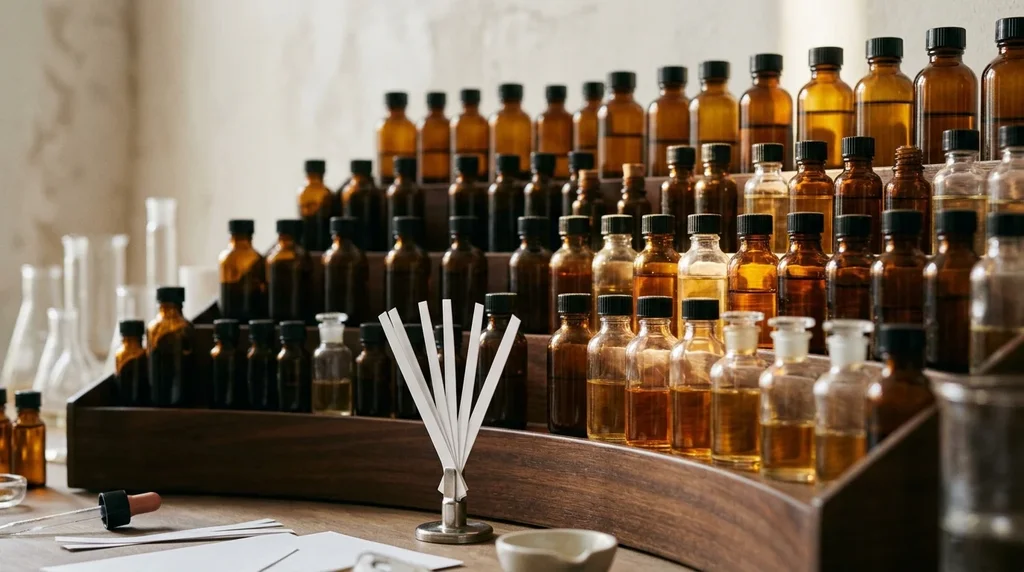
The group's official headquarters is in Kaiseraugst, in the canton of Aargau, but it is in Satigny, a dozen or so minutes by train from Geneva, that the global headquarters of the perfumery and beauty division is located. According to PME, more than 60,000 tonnes of fragrance are produced there every year, making it the largest plant of its kind in the world. The site houses a library of more than 4,000 ingredients, application laboratories, a test laundry, a hair salon and shower cubicles where new creations are tested under real-life conditions, including in a room at more than 40 degrees for a laundry detergent intended for the Indian market.
The report does not put a figure on the effects of the restructuring on jobs or investment in Switzerland. It does show, however, that the refocused business, that of the fragrance industry, is developed and tested in Satigny for the world's major consumer goods groups, whose names remain confidential.
Profitability has yet to be demonstrated
With the restructuring presented as finished, it remains to be proven that the promised synergies will materialise in the income statement. A new savings programme of EUR 100 million is intended to raise profitability to the level of the sector's leaders: this is a management target, not yet a result. According to PME, DSM-Firmenich's return to the top will depend on the announced improvement in profitability and cash-flow generation.
Sources
- PME: "DSM-Firmenich: dans les couloirs de la manufacture suisse de parfums"