Since the start of 2026, the Migros-Pionierfonds has added several new projects to its support programme, Startupticker.ch reports in an article published on 6 October 2026. The batch includes several deeptech start-ups active in energy and a healthtech company, but also a project promoting biodiversity in agriculture and an initiative helping refugees access the Swiss labour market.
A fund that picks its own projects
According to Startupticker.ch, the support fund of the Migros Group companies has, since 2012, been allocating financial resources to projects across various fields that aim for a concrete, long-term benefit to society. A distinctive feature of the model: the Migros-Pionierfonds team actively seeks out the projects to support and accepts neither applications nor requests.
The fund has around CHF 16 million a year at its disposal, again according to the same source. It is financed by Migros Group companies, including Denner, Migros Bank, Migrol, migrolino and Ex Libris. Selected projects receive financial support for three to five years. The amounts allocated to each of the projects presented here are not specified.
apricot 366: storing energy in aluminium
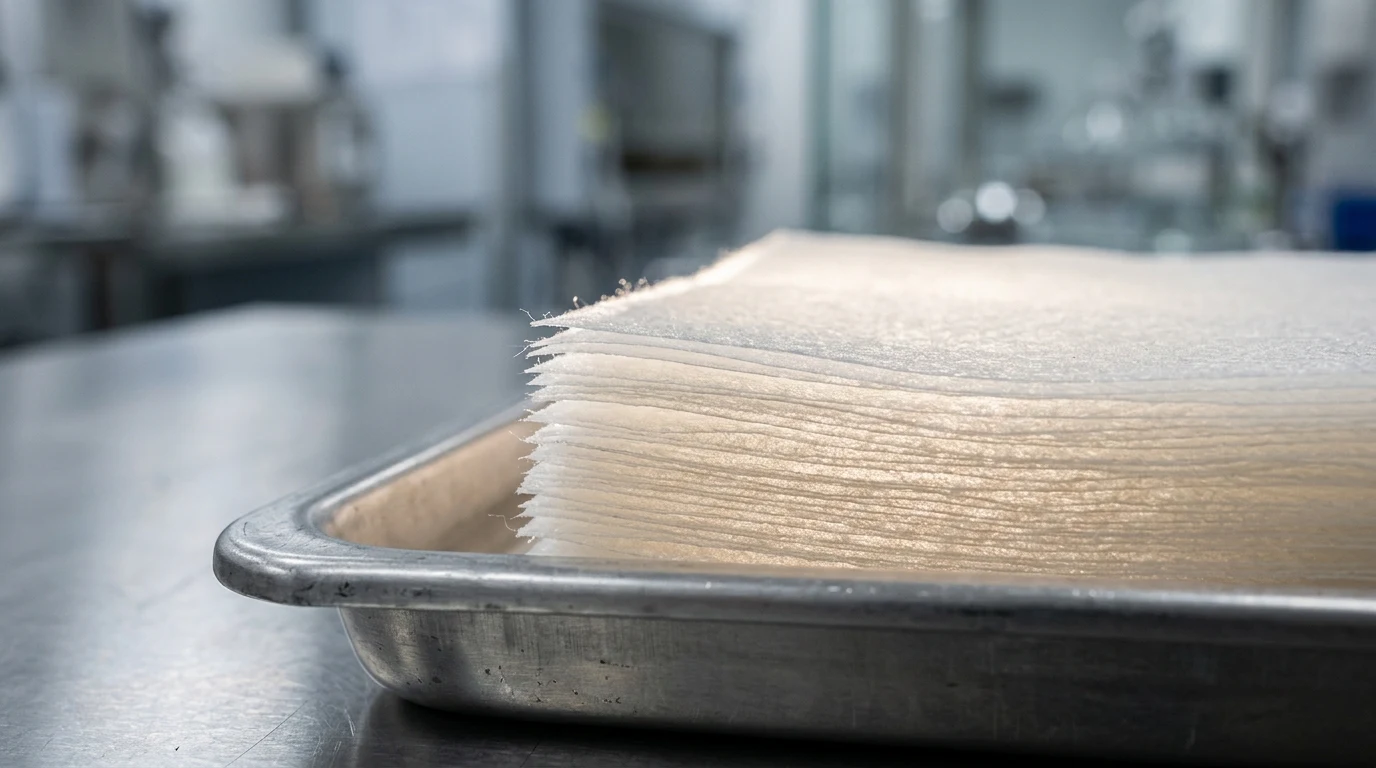
Based in the canton of St. Gallen and founded in 2023, apricot 366 is a spin-off of OST – Ostschweizer Fachhochschule. Its founder and CEO Michel Haller and his team aim to store renewable energy over the long term and transport it over long distances, using aluminium as the carrier. The principle: in an energy-intensive process, aluminium oxide is converted into aluminium using renewable energy, which is thus stored in the metal. The metal can then be transported to its destination and oxidised again to release the energy.
On the partnership side, a partner in Iceland handles the production of the aluminium, and therefore the storage of the energy: electricity generation there relies exclusively on renewables, and CO2-free aluminium production technology is highly advanced there, Startupticker.ch explains. The energy-release technology was developed at OST and has passed the laboratory proof-of-concept stage.
With the fund's support, the start-up wants to move on to the next stage: an MVP (“Minimum Viable Prototype”, according to the source) and field tests. To that end, the conversion device, which is still relatively bulky, needs to be made smaller and automated. The manufacturing process for the required aluminium granulate is to be developed further and then sub-licensed to producers. On the financing side, the company has converted from a limited liability company (GmbH) into a public limited company (AG) with private investors, and says it is now ready for a next funding round. Neither the amount nor the timing of this round is specified.
Windworks: compact wind turbines for farms and municipalities
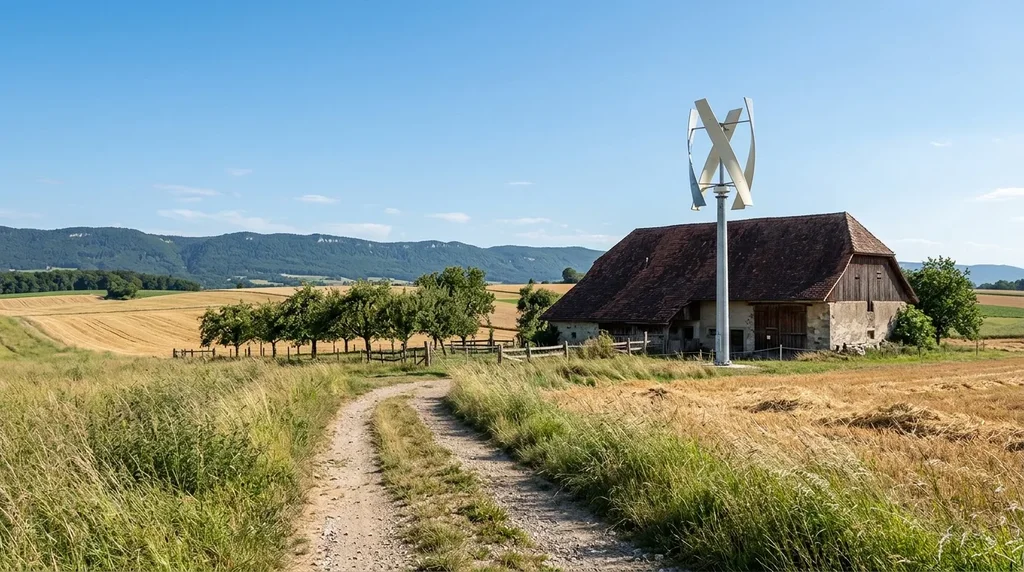
Windworks, a Vaud-based start-up founded in 2025, is developing compact vertical-axis wind turbines with a maximum height of 30 metres. At the heart of the system is an in-house control technology that continuously adjusts the orientation of the blades to changes in the wind. The installations are aimed in particular at farms, factories and municipalities with their own land. Their small size means they can be set up on farms or company sites, for example, and the permitting procedure is less cumbersome than for large wind farms, according to Startupticker.ch. Support from the Migros-Pionierfonds is intended to enable the first turbines to be piloted and to bring the technology to commercial maturity.
Kelva Systems: stored renewable heat for industry
Zurich-based Kelva Systems, founded in 2025, starts from an observation: solar and wind energy are not always available when they are needed, whereas industry depends on a reliable supply of heat for its processes. The start-up is developing thermal energy storage units that convert renewable energy into heat and store it in a thermal battery. This heat can be released on demand, with the aim of gradually replacing industrial boilers running on fossil fuels and reducing emissions. With the fund's backing, Kelva Systems is pursuing the development of its technology with pilot customers and preparing its market entry.
Elysia Solutions: AI-supported preventive healthcare
The only healthtech on the list, Elysia Solutions (St. Gallen, 2026) wants to make prevention more accessible in Switzerland and turn it into an integral part of the healthcare system. The start-up uses artificial intelligence to analyse individual biomarkers and identify possible causes of health risks. On this basis, patients receive personalised, scientifically grounded recommendations, for example on diet, physical activity, sleep or the use of dietary supplements. Implementation is supported and monitored via an app and during medical check-ups, in order to track which measures are having an effect. With the fund's support, Elysia Solutions is testing routes to market and developing its offering to commercial maturity.
Path2Work and ReVerde: employment for refugees and agricultural biodiversity
Path2Work, which according to the source has not yet been incorporated as an entity, offers refugees in Switzerland free support in their job search. The platform helps them make their professional skills visible and identify suitable fields in the Swiss labour market, based on a profile that emphasises abilities rather than qualifications. An algorithm matches these profiles against open positions and forwards relevant profiles to companies. The project is run in partnership with the Swiss Confederation. Its evaluation phase is expected to run from March 2025 to March 2027; during this period, its effectiveness is being studied by researchers from ETH Zurich and the University of Lausanne. In parallel, Path2Work is to be transferred to a non-profit structure, to enable regular, sustainable operation after the evaluation. The fund is intended to help demonstrate the project's effectiveness and feasibility and to support its market entry.
The ReVerde association (Zurich, 2025) supports farms in planning and implementing biodiversity measures: from initial advice to an ecological and economic cost-benefit analysis, through to the planning, financing and implementation of concrete measures. The focus is also on the economic value of biodiversity promotion areas for the farm. With the support of the Migros-Pionierfonds, the offering is being tested in a twelve-month pilot phase, before laying the groundwork for possible scaling up.
CellX Biosolutions and DeltaSpark round out the list
The Migros-Pionierfonds also added the start-ups CellX Biosolutions and DeltaSpark to its programme in 2026, Startupticker.ch notes, having already reported on them in another context. The article gives no further details on these two cases of support.
Key takeaways
The three energy projects cover different approaches: storing and transporting energy via aluminium, decentralised wind power generation, and stored industrial heat. What they have in common, according to the source: the fund's support is to be used for pilot or field tests, development to commercial maturity, or preparation for market entry. This is multi-year support, not to be confused with a funding round: the only financing transaction mentioned in the source concerns apricot 366's private investors, with no amount disclosed. Nor does the source specify what share of the roughly CHF 16 million a year goes to the projects presented.
Sources
- Laura Farese, “Startups erhalten Förderung vom Pionierfonds”, Startupticker.ch, 6 October 2026.