Securitas, a Swiss company active in security services, allegedly made part of its staff work excessive hours for years. This emerges from an analysis of internal data carried out by SRF Investigativ, the investigative unit of the German-language Swiss public broadcaster SRF, reported on 19 October 2026 by the Keystone-ATS news agency and picked up by SWI swissinfo.ch. The group acknowledges failings in some cases, but disputes the scale attributed to it.
What the SRF investigation claims
According to this analysis, around 20,000 breaches of the Labour Act were allegedly committed between 2023 and 2025. Some 900 employees were reportedly affected. Set against each other, these two figures would represent on average more than twenty breaches per person concerned over the period, which helps explain why the specialists interviewed speak of a fundamental problem rather than isolated incidents.
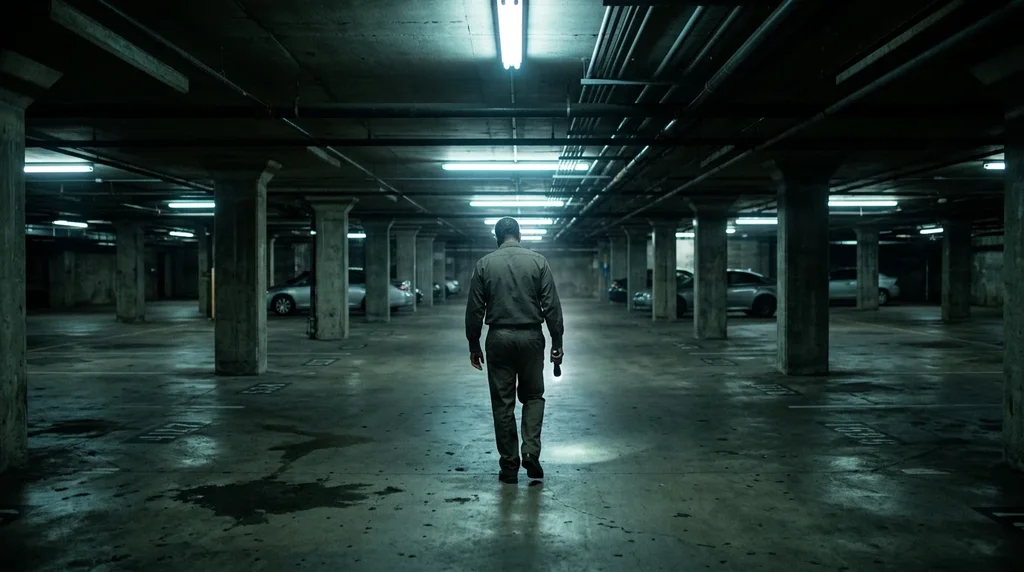
Two types of failings dominate, again according to the reported information: shifts of excessive length and insufficient rest periods. The employees concerned were reportedly assigned to prisons, hospitals and centres for asylum seekers, sites where a security presence is expected on a continuous basis.
The source does not specify which working-hour limits were allegedly exceeded, nor by how much. Nor does it detail the breakdown of cases by year, by canton or by type of contract. It is therefore not possible, at this stage, to say whether the situation changed between 2023 and 2025 or whether it was concentrated at certain sites.
Two legal experts speak of a systematic practice
Questioned by SRF, Denis G. Humbert, a lawyer specialising in labour law, sees in these data “the sign of a systematic practice” and calls on the authorities to intervene. “This is not permissible, it is unacceptable. It is exploitation of staff, and that is not allowed,” he said, according to the reported remarks.
Kurt Pärli, professor of law at the University of Basel, shares this reading. In his view, what has been uncovered “cannot be explained by a simple scheduling error”, and the problem “goes well beyond that”. These assessments are those of experts consulted by a media outlet; they do not amount to a decision by an authority.
Securitas's response
In a written statement, Securitas admits that, in some cases, the practices applied did not comply with the principles of labour law or with the company's values. It says that the measures taken in recent years have reduced the number of problematic cases, without the source putting a figure on this decrease.
The group does, however, dispute the total of 20,000 breaches. Without ruling out errors, it maintains that there was no general and systematic violation of the Labour Act. The two readings therefore diverge less on the existence of failings than on their scale and nature: errors being corrected, according to the company; an organised practice, according to the legal experts interviewed by SRF.
Accusations and established facts
Based on the information published so far, several levels must be distinguished:
- Acknowledged by Securitas: cases where practices did not comply with the principles of labour law, and a reduction in these cases following measures taken in recent years.
- Claimed by SRF and disputed by the company: the figure of around 20,000 breaches between 2023 and 2025, as well as the general and systematic nature of the failings.
- Claimed by SRF, with no reported response from the company: the number of around 900 employees affected and the places where they were assigned.
- Not established: no official finding by an authority is mentioned in the source.
Labour Act, cantonal inspections, sanctions: what is not specified
The investigation is presented as concerning breaches of the Labour Act, which, according to the reported information, covers the length of shifts and rest periods. The source does not, however, cite the provisions concerned or the ceilings that were allegedly exceeded.
Nor does it indicate whether a cantonal labour inspectorate or another authority has been called in, whether proceedings have been opened, or what sanctions Securitas could face. Denis G. Humbert's call for the authorities to intervene is, at this stage, the only mention of their role. Any statement about the legal consequences would therefore be premature.
What remains to be followed
For the security officers concerned, the stakes are concrete: the length of their shifts and the recovery time between two assignments. For the institutions that host these officers, prisons, hospitals and centres for asylum seekers, the question concerns the conditions under which the security of their sites is ensured.
Three points will make it possible to better gauge the affair: any reaction from the competent authorities, how the total of 20,000 breaches was established from the internal data and why Securitas disputes it, and finally the actual extent of the decrease that the company attributes to its measures. As long as these elements are missing, the case remains one of serious accusations, partially acknowledged, but whose extent has not been established.
Sources
- SWI swissinfo.ch: “Swiss security firm accused of thousands of labour law breaches”