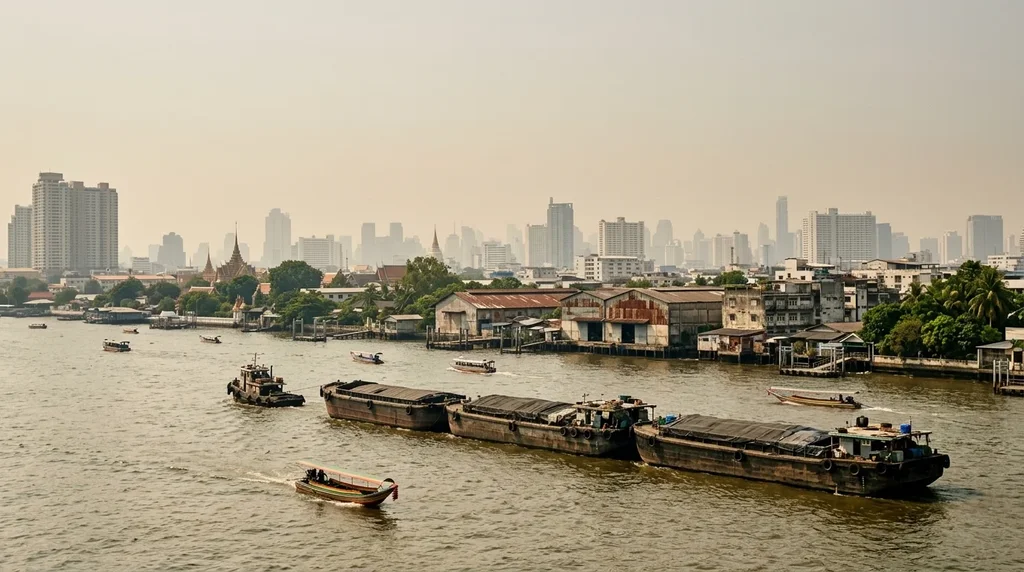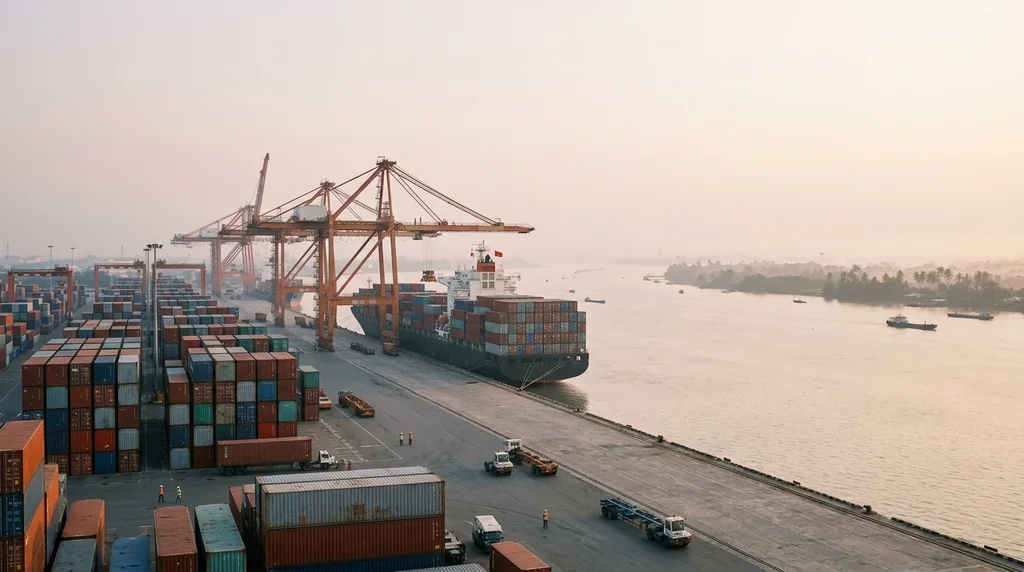
Swiss President Guy Parmelin was received in Hanoi on Saturday 17 October by Vietnamese President Tô Lâm and Prime Minister Lê Minh Hưng. According to the press release published by the State Secretariat for Economic Affairs (SECO), the talks focused mainly on bilateral relations and led to agreements in several areas. The most anticipated part comes the following day: the signing, scheduled for Sunday 18 October, of the free trade agreement between the member states of the European Free Trade Association (EFTA) and Vietnam.
The press release, however, brings together acts of very different kinds. Distinguishing between them makes it possible to gauge what genuinely commits the two countries, and what is still a matter of intention or negotiation.
What was signed in Hanoi
During the visit, several bilateral arrangements were signed between Switzerland and Vietnam. SECO cites in particular the launch of two economic development cooperation projects. These projects are intended to support the implementation of the free trade agreement and to promote sustainable urban development. The stated aim is to improve the framework conditions for trade and investment, and to strengthen long-term competitiveness.
These projects do not start from scratch. Since 2008, Vietnam has been a priority country of Switzerland’s economic cooperation programme. The current programme, which covers the period 2025–28, supports sustainable trade and innovation, a stable financial sector, and climate-focused industrial and urban development.
What remains a declaration of intent
Other texts signed do not carry the same weight. They are letters of intent, one on closer cooperation on labour and employment, the other on innovation. A letter of intent expresses a shared will; it generally creates neither a binding obligation nor a timetable. Its significance will depend on the concrete steps that follow.
Several issues also remain open. The two sides stressed their mutual interest in concluding negotiations on a modernised investment protection agreement, designed to strengthen legal certainty for investments. These negotiations are therefore not complete. The same applies to discussions on climate cooperation under Article 6 of the Paris Agreement, which allows states to cooperate to meet their emission reduction targets. Finally, the press release mentions the difficult international situation and the commitment of both countries as members of the UN Human Rights Council, without detailing the exchanges.
The EFTA–Vietnam free trade agreement, on Sunday’s agenda
The central text of the visit is not bilateral. The free trade agreement is due to be signed by the four EFTA states and Vietnam on Sunday 18 October. The day’s programme also includes the opening of a Swiss-Vietnamese economic forum. Guy Parmelin is accompanied by a delegation of Swiss companies.
According to SECO, the two sides emphasised the opportunities offered by the agreement. They present its signing as an important political gesture, reaffirming their shared commitment to open, rules-based trade. The press release does not, however, detail either the tariff reductions or the sectors covered.
Signing is not entry into force. In Switzerland, a free trade agreement must in principle still be approved by Parliament and may be subject to an optional referendum. The press release gives no ratification timetable.
What this changes for Swiss companies
At this stage, there are no figures. The press release puts forward neither a trade volume nor an expected gain for Swiss exports. What it allows us to say remains qualitative.
- Exporters: the EFTA–Vietnam agreement is meant to set a common framework for trade, but its concrete effects will depend on its content and its entry into force, which the press release does not specify.
- Investors: the decisive project remains the modernised investment protection agreement, still under negotiation. It is its conclusion that is meant to strengthen legal certainty.
- Companies active on the ground: the cooperation projects and the 2025–28 programme target framework conditions, such as sustainable trade, the financial sector or urban development, rather than direct benefits for any given company.
The relationship is a long-term one: Switzerland and Vietnam have maintained diplomatic relations for 55 years, formalised in 2026 by a comprehensive partnership. After his talks with Tô Lâm and Lê Minh Hưng, Guy Parmelin was due to meet the Chairman of the National Assembly, Trần Thanh Mẫn, as well as other members of the government.
Sources
- Swiss Confederation — SECO: “Switzerland and Vietnam strengthen ties in trade, investment and innovation”