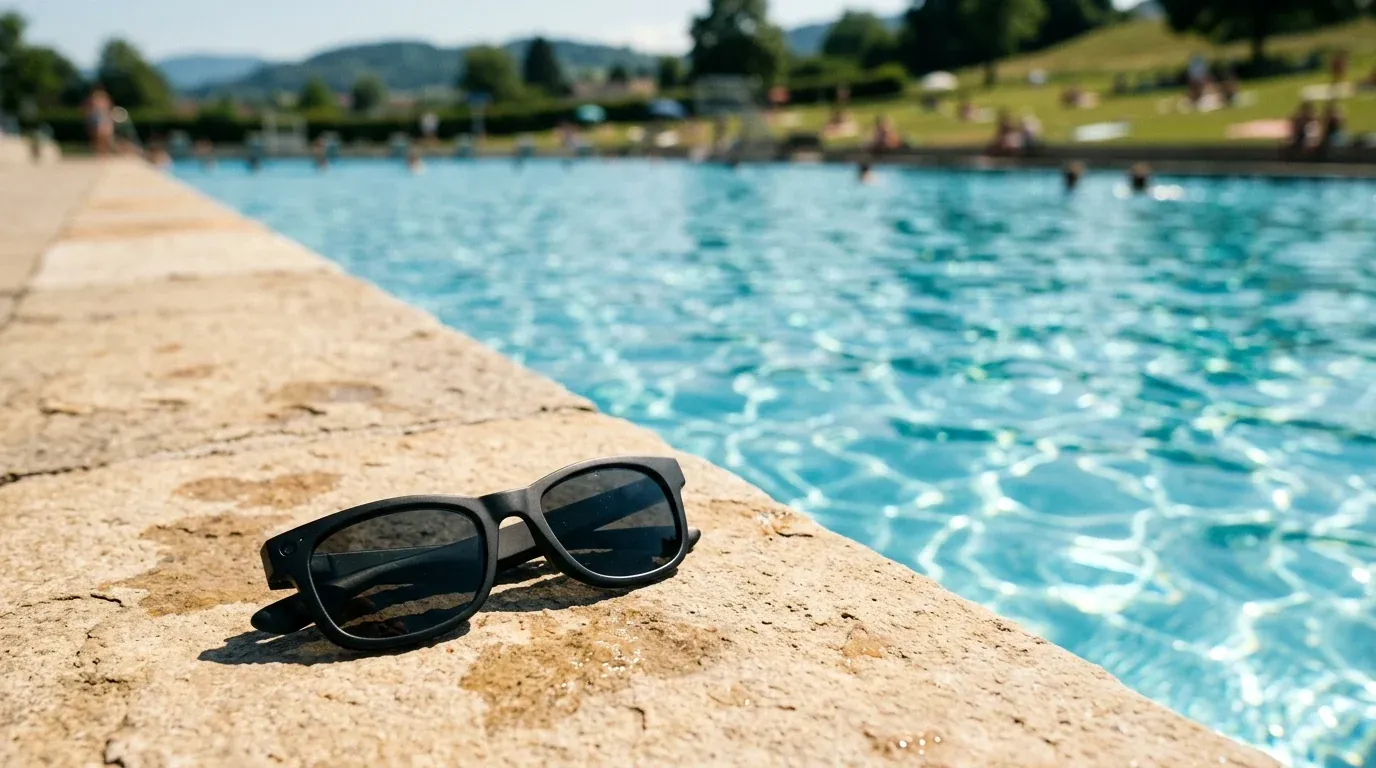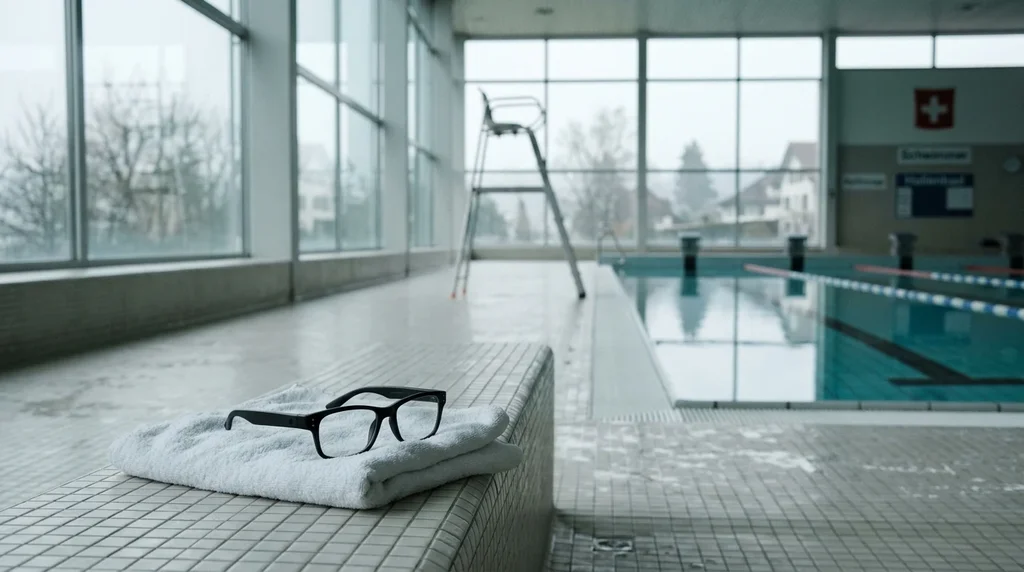
Camera-equipped glasses have no place at the poolside or in changing rooms. That is the message sent on Monday 12 October by three associations from German-speaking Switzerland: the Swiss association of swimming teachers, the swimming pool association and the Swiss sauna federation. In a joint statement relayed by the Keystone-SDA news agency, they argue that the rules of municipal and local swimming pools should prohibit the wearing of these devices.
A recommendation, not a legal ban
The nature of the initiative should be made clear first. These are professional associations addressing operators: they advise cities and municipalities to amend their facility regulations. In their view, the wearing of optical devices with a recording function should from now on be excluded from all facilities.
To make this rule enforceable on the ground, the associations have drawn up a guide for staff as well as an information poster for bathers. In practice, it is therefore up to each operator, often a municipality, to decide whether to include this ban in its house rules.
What these glasses film, and why they cause concern
So-called smart glasses are fitted with a built-in camera that can take photos or shoot videos.
It is precisely this point that motivates the associations: these devices are hard to tell apart from ordinary glasses. In their statement, they warn against photos and videos taken without the knowledge of the people being filmed, and consider that privacy is under threat in pools and changing rooms, places where people are by definition scantily dressed.
How can they be spotted? The associations do not provide a list of distinguishing features, and it is precisely because these glasses look like ordinary models that enforcement is tricky. Their recommendation is in fact broadly aimed at all optical devices with a recording function, rather than at one particular type of product.
A question of privacy
At its core, the issue concerns the protection of privacy, a particularly sensitive matter in places such as pools, saunas and changing rooms. By proposing a rule written into the facilities' regulations, the associations mainly intend to give staff a means to intervene, backed by the guide and poster they have prepared.
Mounting political pressure in German-speaking Switzerland
The associations' initiative is part of a broader context. According to swissinfo.ch, pressure on the authorities has increased in recent months: in Bern, Zurich and other cities, motions have been tabled calling for smart glasses to be banned in municipal swimming pools and sports facilities. At the end of August, the same outlet had already reported that Basel, Lucerne and other Swiss cities were concerned about the presence of these devices in public baths.
In French-speaking Switzerland, no measures for now
On the French-speaking side of the Sarine, the approach is more wait-and-see. The Association of French- and Italian-speaking Swiss swimming pools (APRT) told Keystone-SDA that it is not taking any measures for the time being. It has not received any concrete reports linked to this still relatively recent phenomenon, but points out that its staff have been trained and made aware of the issue.
This difference in pace is hardly surprising: the German-speaking associations are reacting to a political debate already under way in several major cities, whereas French-speaking Switzerland reports no incidents. It remains to be seen whether French-speaking municipalities will in turn adapt their regulations, or whether raising staff awareness will be enough.