The President of the Swiss Confederation, Guy Parmelin, and Chinese President Xi Jinping signed the modernised Switzerland–China free trade agreement in Beijing on 30 October 2026. According to the State Secretariat for Economic Affairs (SECO), the text is intended to improve access for Swiss goods and investment to the Chinese market. Over time, 99.8% of current Swiss exports to China could be exempted from customs duties. Parliament still has to approve it.
Customs duties: what the modernised agreement removes
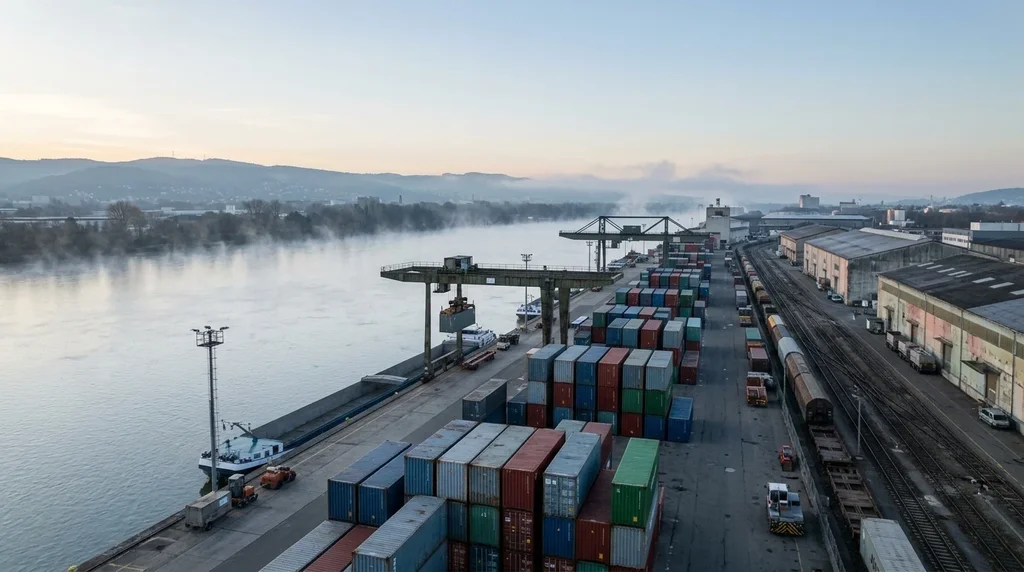
The agreement that entered into force in 2014 left a large share of Swiss shipments subject to duties. According to the Keystone-ATS wire story carried by Allnews, roughly half of Swiss exports to China remained subject to customs duties. Conversely, almost all Chinese products imported into Switzerland were exempt.
The text signed in Beijing aims to correct this imbalance. When the negotiations concluded in August, the government announced that 99.8% of current Swiss exports could in future enter China duty-free. It put the expected savings at around 244 million francs. This is an estimate, not an observed amount.
To put this figure in context, SWI swissinfo.ch recalls an assessment published in 2018: the 2014 agreement had saved companies 100 million francs in customs duties over the previous year. The two amounts do not measure the same thing. The first was realised; the second remains a forecast that depends on entry into force and on how exporters behave.
The exemptions will not all arrive at once. Three quarters are to apply as soon as the modernised agreement enters into force. For cheese and coffee, the concessions obtained will only apply within a period of 10 years, according to Keystone-ATS.
Machinery, watches, pharma: sectors that gain unevenly
The benefit depends heavily on the product being exported. The table sets out what the sources say, sector by sector.
| Sector | Under the 2014 agreement | With the modernised agreement |
|---|---|---|
| All exports | Roughly half subject to duties | 99.8% eligible for exemption over time |
| Machinery and precision products | Customs barriers considered significant by Swissmem | "Significant customs barriers" removed, according to Swissmem |
| Watchmaking | Virtually no exemption | Chinese luxury tax maintained on 95.5% of export value |
| Pharma | Very partial exemption | No details published for the sector |
| Cheese and coffee | Disadvantaged | Concessions applied within a period of 10 years |
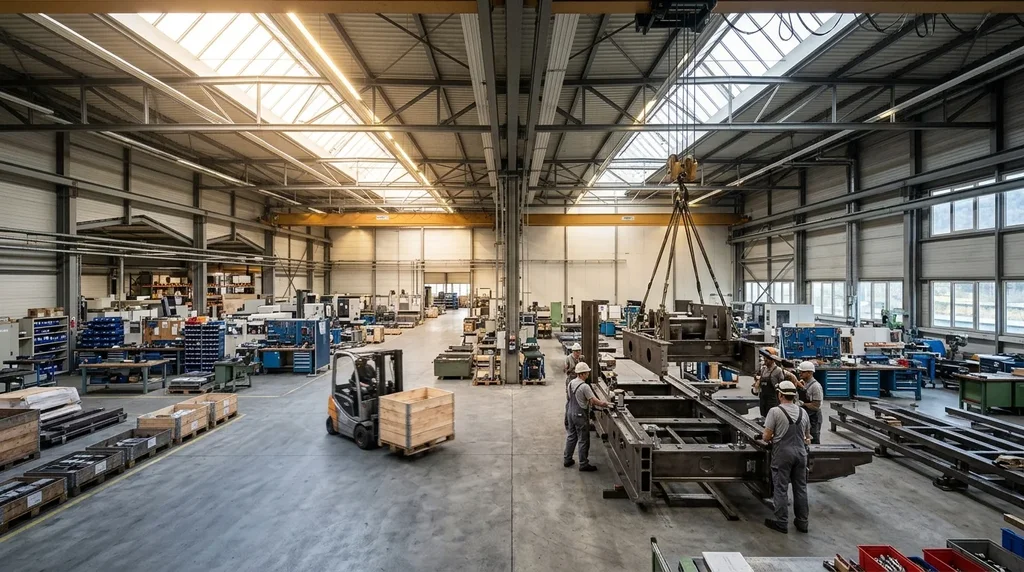
On paper, the machinery industry is the clearest winner. Swissmem, the umbrella association of the Swiss machinery industry, welcomes a text that in its view removes "significant customs barriers for the Swiss tech industry, particularly for machinery and precision products". To gauge the sector's weight: Swiss exports of machinery, electronics and equipment reached 13.7 billion francs in the third quarter of 2026, across all destinations, according to figures from the Federal Office for Customs and Border Security (FOCBS) detailed in our article on Swiss exports in September.
Watchmaking gains much less than it might seem. Swiss watches will remain subject to China's tax on luxury goods, which is separate from customs duties. The Federation of the Swiss Watch Industry (FH) confirmed to Keystone-ATS that this tax will apply to 95.5% of the value of watch exports to China. The backdrop is already difficult: according to the FH, watch shipments to China fell by 14.2% in September 2026, a decline it attributes to an unfavourable base effect. Jean-Philippe Bertschy, an analyst at Vontobel bank, saw in this a cautious picture of Chinese demand.
Pharma remains the big unknown. Its products were only very partially exempted under the 2014 agreement, but the sources do not specify how they are treated in the new text. Yet the stakes are high: chemicals and pharmaceuticals exported 39.3 billion francs' worth of goods in the third quarter of 2026, more than half of Swiss exports, according to the FOCBS.
For an exporting SME, nothing changes until the agreement is in force. After that, the effect will depend on its tariff line: some of the reductions will be immediate, others phased in over time.
From the August conclusion to the signing in Beijing
The signing on 30 October 2026 formalises a compromise reached in August 2026. SWI swissinfo.ch reported on 20 August 2026 that Switzerland and China had agreed to remove customs duties on 99.8% of Swiss exports, after transition periods. 2clics had at the time detailed the conclusion of the Switzerland–China negotiations.
Three texts were signed in Beijing, according to the SECO press release. The first is the optimised free trade agreement. The second concerns cooperation on labour and employment, linked to that agreement. The third provides a framework for cooperation in research and development: it is intended to allow Swiss researchers to exchange scientific data with their Chinese partners within a secure legal framework.
The social and environmental component is presented as a new feature. The rules on environmental protection and labour law are set out in a legally binding chapter devoted to trade and sustainable development. According to the Confederation, this is a first in a free trade agreement concluded by China.
The trade relationship carries considerable weight. China is Switzerland's third-largest trading partner, and in 2014 Switzerland was the first European country to conclude a free trade agreement with it. The two countries established diplomatic relations in 1950 and an innovative strategic partnership in 2016, SECO notes.
The visit is part of a busy Asian tour for the President of the Confederation. Guy Parmelin met the Thai prime minister in Bangkok on 15 October to discuss the EFTA–Thailand free trade agreement, and was then received in Hanoi on 17 October, on the eve of the planned signing with Vietnam. In China until Saturday 31 October, he is still due to meet the Minister of Commerce, Wang Wentao, and open the ninth Sino-Swiss Economic Forum.
Ratification: Parliament first, a referendum possible
Signing is not entry into force. The modernised agreement must first go before the Federal Assembly. In Switzerland, a free trade agreement must in principle be approved by Parliament and may be subject to an optional referendum. None of the sources gives a timetable for ratification.
Business circles are pushing for speed. Swissmem calls on Parliament to "ratify the agreement quickly". At the other end, the left has expressed reservations, and the Greens have said they are ready to launch a referendum, according to Keystone-ATS. This is an announced intention, not a signature collection that has begun.
Divergent readings of the agreement's scope
The sustainable development commitments leave some specialists sceptical. In August, Thierry Theurillat, a professor at HEG-Arc in Neuchâtel within the Swiss Eurasian Institute of Management (SEIM), considered that what these clauses change remained "to be verified on the ground". He wondered who would ensure they are respected, given the pollution and working-condition problems observed locally.
Human rights remain the most contested point. Lionel Fatton, a professor of international relations at Webster University Geneva, denounced "radio silence" on the subject in August and anticipated "a backlash from civil society". For its part, SECO states that the latest session of the bilateral human rights dialogue was held in Bern on 19 and 20 October 2026.
The international context also weighs on how the text is read. The détente with Beijing comes as US tariffs are creating uncertainty in world trade. For Lionel Fatton, quoted by Keystone-ATS, Beijing has "every interest in presenting itself as a stabilising element in international trade". Thierry Theurillat, for his part, believes that China is pushing Switzerland to relocate strategic skills there, which in his view raises the question of competitive advantage.
What we don't know yet
- The date of entry into force: neither SECO nor the press gives a timetable for Parliament.
- The detailed treatment of pharma and other sectors, beyond the overall figure of 99.8%.
- Whether a referendum will actually be launched by the Greens, who only say they are ready.
- Any concessions made by Bern in return: according to Keystone-ATS, it is hard to tell whether Switzerland had to make sacrifices.
- The real benefit for watchmaking, as long as the Chinese luxury tax remains in place.
Sources
- Swiss Confederation — SECO: "Switzerland and China strengthen cooperation in trade and science", 30 October 2026
- Allnews (AWP/ATS): "Guy Parmelin signe l'accord de libre-échange avec la Chine à Pékin", 30 October 2026
- SWI swissinfo.ch (Keystone-SDA): "Swiss and Chinese presidents sign free trade agreement", 30 October 2026