Swiss GDP grew by 0.2% in the third quarter of 2026, according to the flash estimate published on 16 November 2026 by the State Secretariat for Economic Affairs (SECO). Swiss economic growth is slowing markedly after the 1.5% jump in the second quarter: industry is still growing, while services are stagnating overall.
What SECO's flash estimate says
The SECO figure is a first estimate, not a final result. The "GDP flash" is calculated about 45 days after the end of the quarter, based on the first available production data. Data that are still incomplete are supplemented with forecast values, SECO explains on its page dedicated to the GDP flash.
SECO also words the result cautiously. In German, its page states that the Swiss economy "is likely to have grown" by 0.2%. The industrial sector grew again, while the services sector stagnated overall, according to the press release of 16 November 2026.
The figure may still change. SECO publishes detailed results about 60 days after the end of the quarter, with updated calculations for previous quarters.
A clear slowdown after an exceptional second quarter
The 1.5% in the second quarter is an increase compared with the first quarter, not an annualised rate. According to the AWP agency report published by Allnews on 16 November 2026, the boost then came mainly from the chemical and pharmaceutical industry. At the start of the year, GDP growth had reached 0.5%, according to the same report.
Exports shed light on this acceleration followed by a return to calm. According to the Federal Office for Customs and Border Security (FOCBS), chemical and pharmaceutical shipments had jumped by 15.7% in the second quarter. In the third, they gained only 1.6%, to 39.3 billion francs, as detailed in our article on Swiss exports in September.
The result is within the expected range. Economists surveyed by AWP had forecast GDP growth of between −0.3% and +0.4%.
The sectors pulling ahead and those holding back
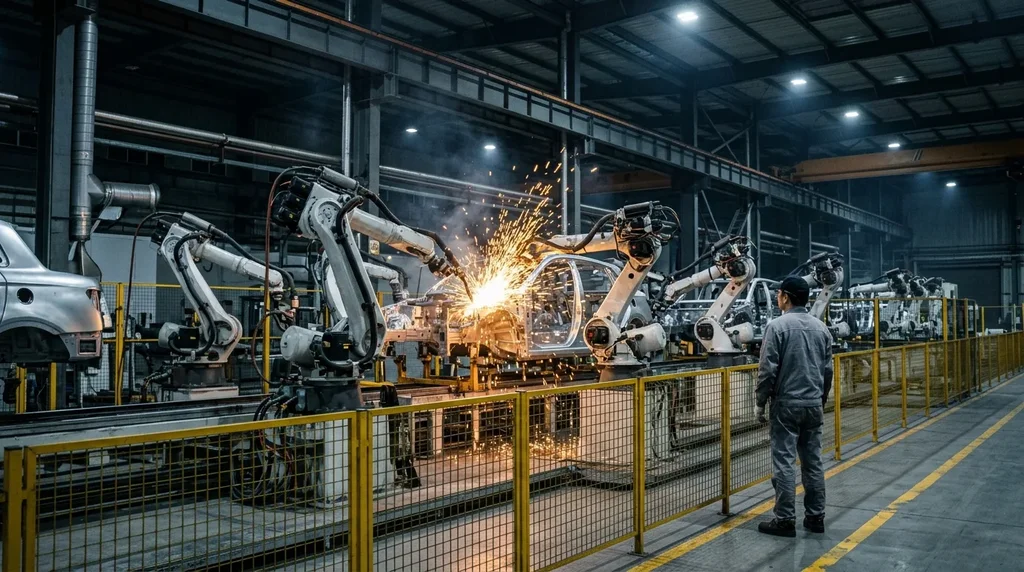
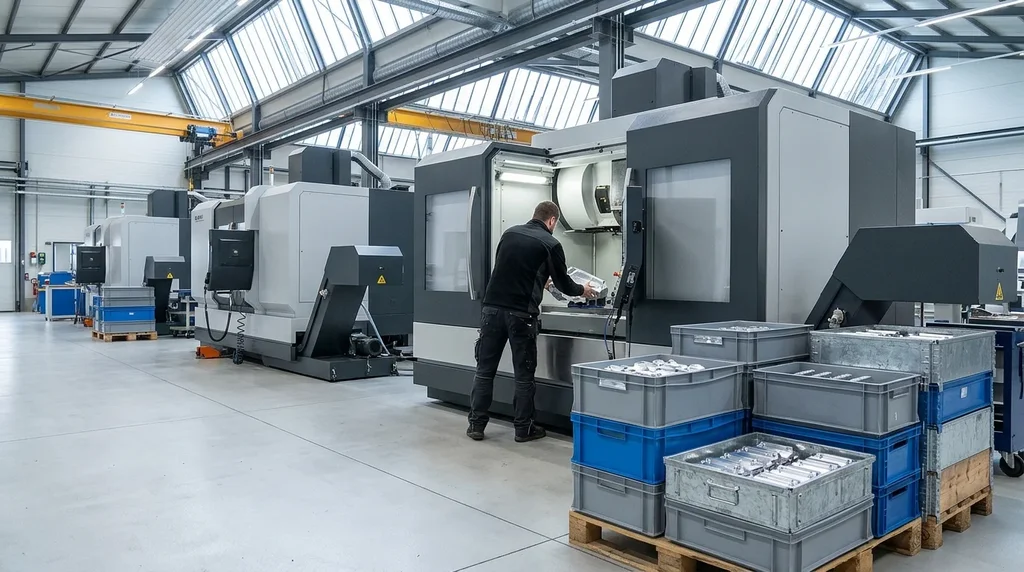
Industry remains the driving force, but its growth is no longer limited to pharma. According to the FOCBS, Swiss exports rose by 2.6% in the third quarter, to 75.0 billion francs. The machinery, electronics and equipment industry gained 3.1%, to 13.7 billion, and watchmaking 4.7%, to 6.7 billion.
The major groups confirm this solid quarter. Basel-based group Roche saw its sales rise by 8.1% in francs between July and September, to 16.13 billion, as noted in our article on Roche's nine-month sales.
Services, for their part, are marking time. SECO does not yet detail the sectors concerned. Consumption indicators paint a mixed picture:
- card spending by PostFinance customers rose by 0.8% year on year in August, by 0.9% in September, then by 1.6% in October 2026;
- SECO's consumer sentiment index fell to −45 points in October 2026, 8 points lower than a year earlier;
- hotel bookings and car rentals fell sharply in October, according to PostFinance.
These figures are detailed in our article on Swiss consumption in October. They partly concern the fourth quarter and do not directly measure the value added by services.
Swiss GDP compared with Germany and the eurozone
Switzerland is growing at the same pace as Germany in the third quarter, but more slowly than the eurozone. The European figures come from the flash estimates of Destatis and Eurostat of 30 October 2026, presented in our article on Germany's GDP.
| Economy | 2nd quarter 2026 | 3rd quarter 2026 |
|---|---|---|
| Switzerland (SECO, AWP) | +1.5% | +0.2% |
| Germany | +0.3% | +0.2% |
| Eurozone | +0.6% | +0.4% |
| France | 0.0% | −0.1% |
Change in GDP compared with the previous quarter. Third-quarter figures are flash estimates and are subject to revision. Excluding Ireland, eurozone growth falls to 0.2%, according to Oxford Economics.
What this means for businesses and employment in Switzerland
The labour market is following the same trend as growth. According to the Federal Statistical Office (FSO), unemployment as defined by the International Labour Organization (ILO) reached 5.6% in the third quarter of 2026, compared with 5.1% a year earlier. After seasonal adjustment, the volume of work in full-time equivalents fell by 0.4% from one quarter to the next. Our article on Swiss unemployment in the 3rd quarter details these figures.
Job openings are not collapsing, however. In October 2026, 40,462 vacancies were registered with the regional employment offices, 15.6% more than a year earlier, according to SECO. The registered unemployment rate remained at 3.0%.
For businesses, pressure also comes from trading partners. Credit insurer Allianz Trade expects around 15,000 bankruptcies in Switzerland in 2026. This is a projection, inflated in part by the new insolvency law, as explained in our article on the expected record in bankruptcies.
Normalisation or loss of momentum: two readings
The economists quoted by AWP see normalisation first and foremost. "The slowdown in growth should not be interpreted as cyclical weakness," says Santosh Brivio, economist at Migros Bank. Gero Jung, of the Banque Cantonale du Valais (BCVS), considers that growth of 0.2% "gives no cause whatsoever for concern".
Kevin Gismondi, economist at Zürcher Kantonalbank (ZKB), notes that GDP is "well above its level of the previous year". In his view, the available economic indicators paint a positive picture for the fourth quarter. Santosh Brivio, for his part, expects growth of 1.8% in 2027: this is a Migros Bank forecast, not an observation.
Other signals call for caution. At the end of October 2026, the UBS-CFA barometer of financial analysts fell to −15.3 points, while 61% of chief financial officers surveyed by Deloitte expected a better economic situation. Our analysis of Swiss economic barometers looks at this gap. For context on the year, see also our article on the growth of the Swiss economy.
What we don't know yet
- Whether the 0.2% rate will be confirmed by SECO's detailed results, which will also revise previous quarters.
- Which service sectors held back growth: the flash estimate does not detail them.
Sources
- State Secretariat for Economic Affairs (SECO): "GDP flash for the 3rd quarter of 2026: the Swiss economy growing slightly", 16 November 2026
- SECO: "Flash-BIP: Schnellschätzung für das vierteljährliche reale BIP der Schweiz"
- Allnews (AWP): "Swiss economic growth slows in the third quarter", 16 November 2026