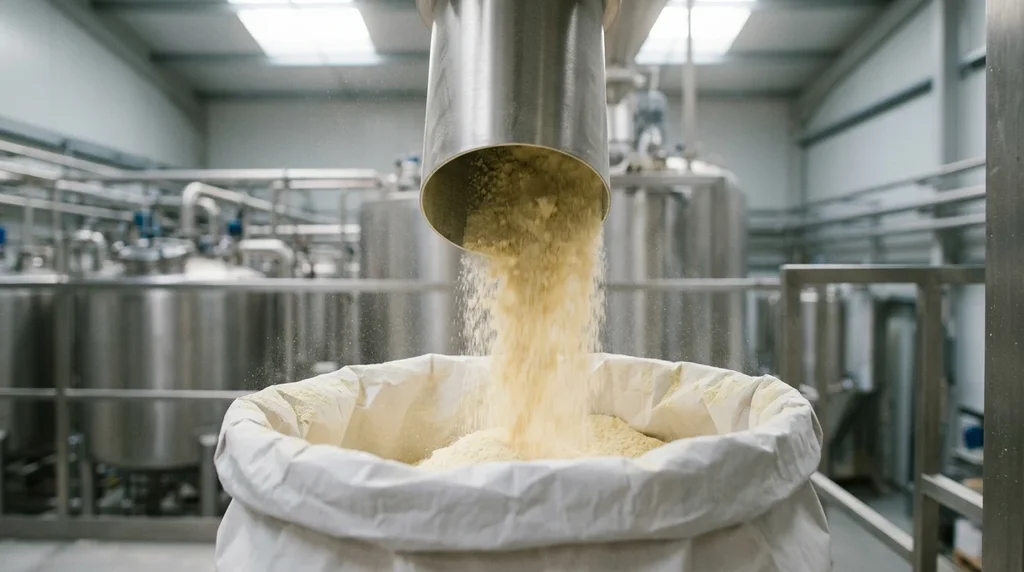
The enthusiasm around plant-based burgers and soy yogurt has faded in Switzerland. As a result, several plant-based nutrition start-ups are changing customers. Rather than targeting the refrigerated aisle, they now sell protein ingredients to food manufacturers. That is the finding of an investigation by the Keystone-ATS news agency, published on October 10, 2026, by SWI swissinfo.ch.
A market in decline after years of growth
According to Coop's latest Plant-Based Food Report, cited by the source, sales of meat substitutes fell in 2025 compared with the previous year. The report describes a trajectory in three phases: several years of strong growth starting in 2019, a slowdown in 2024, then a slight decline in 2025.
The consequences are already visible. This summer, the Bern start-up Outlawz, known for its vegan lardons made from fava bean and wheat protein, filed for bankruptcy. Despite this downturn, some Swiss companies still see opportunities in plant proteins, provided they change their business model.
From B2C to B2B: the case of Fabas
The key word is B2B: selling to other businesses rather than directly to consumers. Fabas is a good illustration of this shift. Founded in 2021, the company first launched as a consumer brand, with hummus, plant-based burgers and falafel. Since 2025, it has focused on developing functional plant-based ingredients for food manufacturers.
“We realized that the main challenge often lies in the plant-based ingredients,” co-founder Katharina Pälchen told the AWP news agency. In concrete terms, Fabas now supplies liquid legume protein extracts that can be processed in much the same way as cow's milk. The sales pitch is operational: enabling manufacturers to launch plant-based products without overhauling their entire production line. Its customers include the Appenzell ice cream maker Sigrist, which uses these extracts to make vegan ice cream.
Brewer's spent grain, pea protein and egg substitutes
Fabas is not alone in this niche. Also in Appenzell, the start-up Upgrain works with the Locher brewery to turn spent grain, the cereal residue left over from brewing, into proteins, fibers and flakes. These materials can then go into baked goods, breakfast cereals, snacks, beverages or meat alternatives. “We want to make spent grain protein a standard ingredient in the food industry,” says co-founder William Pyndt Beiskjær. Coop is among the company's partners.
Even an established player in finished products is following the trend. Planted, based in Kemptthal, is strengthening its B2B business. “B2B is a strategic growth area for Planted, which we plan to develop further in the coming years,” says co-founder Pascal Bieri. Alongside its consumer products, including chicken alternatives, the company plans to supply structured pieces made from pea protein to meat processors and ready-meal manufacturers, who will then be able to process them locally.
A third avenue: eggs. The start-up Eggfield, in Illnau, uses aquafaba, the cooking liquid of legumes, to reproduce many of the functional properties of eggs. It can be whipped like egg whites. The product was developed in 2019 for the Leibacher Biber-Manufaktur, whose co-founder Silvan Leibacher was looking for a natural egg alternative for his vegan Biberli, without a long list of additives. Today, he supplies this substitute to manufacturers and food service companies, including Hiltl. “Avian flu has shown just how vulnerable the egg supply chain can be,” notes Silvan Leibacher.
What this shift says about the business model
Taken together, these examples point to a common logic. In B2C, a start-up has to win over consumers on the shelf, fund its brand and face a market that, according to Coop, is running out of steam. In B2B, it sells a technical solution to manufacturers that have their own brands and their own channels. The arguments put forward are operational: integration into existing lines, upcycling of by-products, diversification of supply. According to the source, manufacturers are increasingly seeking to reduce their dependence on a single ingredient, and plant-based alternatives can help them do so.
A distinction must nevertheless be drawn between the market findings, established by Coop's report, and the companies' statements, which reflect their strategy and ambitions. None of the companies cited discloses, in the source article, any revenue, volume or market share figures linked to this shift.
Funding, the big unknown
One question remains that the source article leaves entirely open: money. It mentions no fundraising, no investors and no valuation for Fabas, Upgrain, Planted or Eggfield. It is therefore unclear whether this move to B2B is a requirement of investors, whether it makes access to capital easier, or whether it simply stems from the need to find more stable revenue. Whether selling ingredients will be enough to make these young companies profitable is something the coming fiscal years will have to show.